


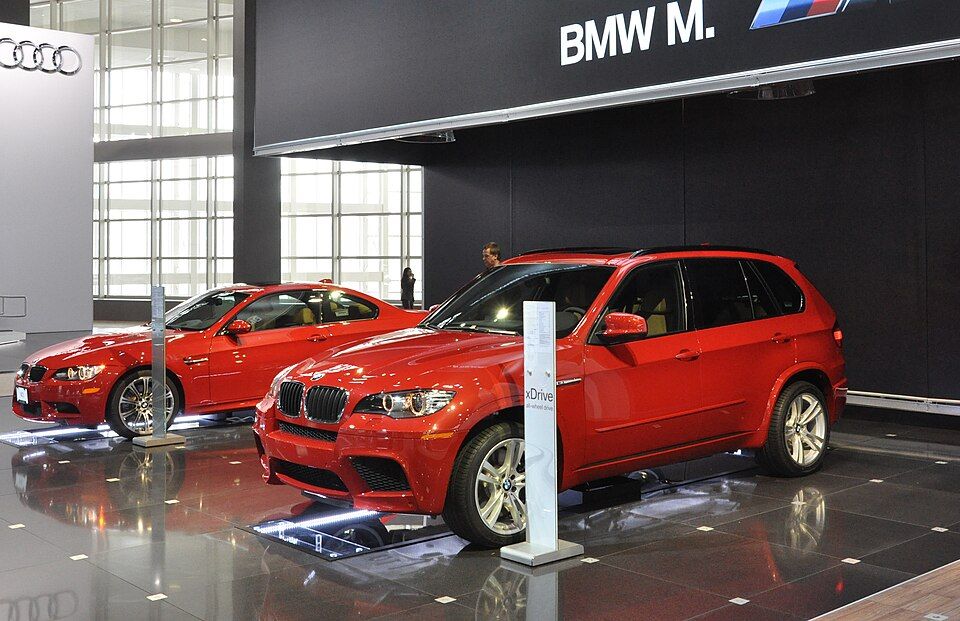
How the BMW X5 Helped Create the Modern Performance SUV
Photo: BMW X5 (E70) by AdamsDblDwn from Chicago, IL, CC BY 2.0, via Wikimedia Commons.
Think back to the late 1990s. Big off-road vehicles were already common, but most people knew what they were getting. They sat high, carried plenty, and looked ready for mud. On a smooth road, though, many felt heavy and slow to react. A sporty saloon was the opposite. It sat low, changed direction neatly, and made a normal drive feel a bit special, but it wasn’t ideal for bulky shopping, muddy boots, a large dog, or a family trip with half the house packed into the back. The BMW X5 arrived in 1999 and brought those two ideas much closer together. BMW called it a Sports Activity Vehicle rather than a standard sport utility vehicle, which sounded like marketing talk, but the car itself made the label easier to accept. It gave drivers the raised seating position and useful cabin they expected from a large off-roader, while aiming for the road manners of a BMW saloon.
That mix is now so familiar that it barely seems unusual. Back then, it was a bold move. Picture an early X5 leaving Stockport, joining the M60, then heading across the Pennines in wet weather. The driver could see over traffic, carry a week’s luggage, and still enjoy a car that felt settled through bends and steady at motorway speed. That was the point. It wasn’t trying to be a farm truck wearing expensive leather. It was built for people whose real life included city streets, school runs, business trips, country lanes, motorway miles, and the odd rough track. The modern performance SUV grew from that same promise: one car that could do the boring jobs without becoming boring itself. BMW didn’t invent every part of the idea, but the X5 put the parts together in a way buyers could use every day.
Why the first X5 felt different from older off-road vehicles
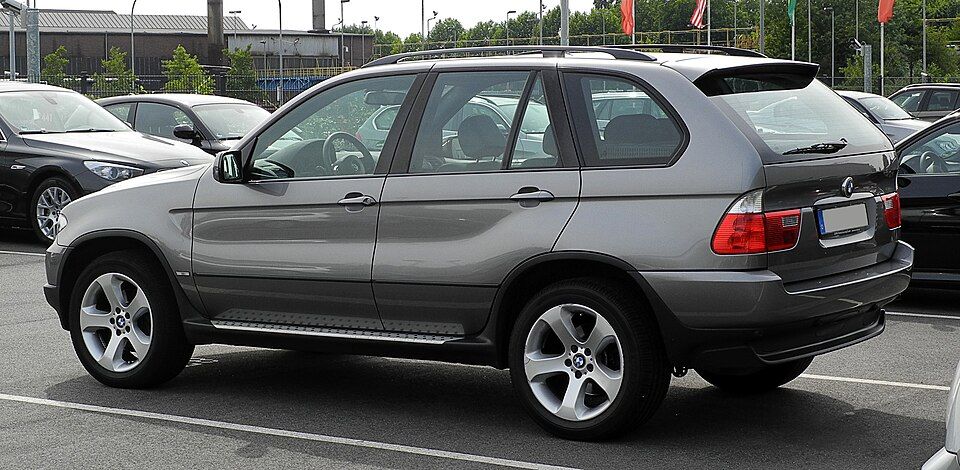
Photo: BMW X5 (E53) by M 93, CC BY-SA 3.0 DE, via Wikimedia Commons.
The first X5 stood apart because BMW treated road behaviour as a main job, not a bonus. Its body structure was very stiff, and it used independent suspension rather than the more basic layout found under many older off-road vehicles. In normal language, each wheel could react to bumps with less disturbance to the rest of the car. That helped the X5 feel calmer and more accurate on tarmac. It also used electronic systems to help keep the car stable, manage wheel slip, and control its speed on steep downhill sections. Those features mattered because the X5 had to cover two very different situations. It needed to feel confident on a rainy bypass near Manchester, yet it also had to cope when the surface became loose, steep, or uneven. BMW’s own history describes the first model as combining a higher seat, a hatchback rear, saloon-like comfort, and off-road ability.
That sentence gets close to the real trick. The X5 wasn’t sold as a hardcore mud machine. Its shape and cabin made it useful, but its personality came from the way it drove on the roads owners used most. You know how it is. A car might have an impressive list of features, but if it leans too much in a roundabout, feels vague in a quick lane change, or bounces over broken tarmac, you notice it every day. BMW worked hard to reduce those old off-roader habits. The X5 still had height and weight, so it could never behave exactly like a small saloon. Yet it gave drivers a much clearer sense of where the front wheels were going. It felt connected rather than distant. That changed what buyers expected from a premium SUV. Comfort and size were no longer enough. The car also had to feel composed, predictable, and enjoyable from behind the wheel. That expectation sits at the centre of the performance SUV category now.
The 1999 launch created a new reference point
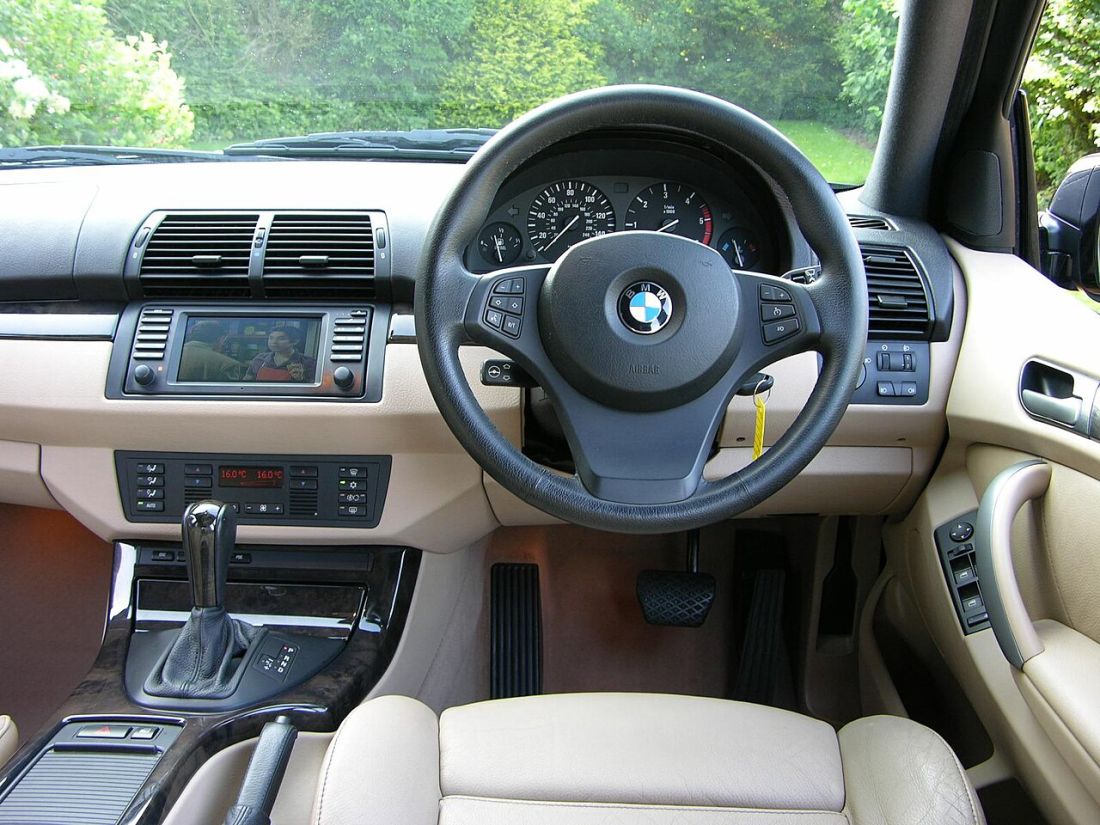
Photo: BMW X5 (E53) Interior by The Car Spy, CC BY 2.0, via Wikimedia Commons.
BMW presented the first X5 at the North American International Auto Show in 1999, and the first production example left the company’s Spartanburg plant in South Carolina on 1 September that year. The first generation remained in production from 1999 to 2006. By the model’s twenty-fifth anniversary in 2024, BMW said nearly three million X5s had been assembled at Spartanburg. Those numbers show that the idea lasted, but the early reaction matters just as much. The X5 gave premium-car buyers permission to choose a large, practical vehicle without feeling that they had left driving enjoyment behind. It also gave BMW customers a reason to stay with the brand when family life, work, hobbies, or simple preference called for extra room.
Before that, someone moving from a BMW saloon into a big off-roader might have had to accept softer reactions and a less car-like feel. The X5 tried to remove that trade-off. And let’s face it, that was a clever business move. People’s needs change. Children arrive. Dogs get bigger. Weekend plans start involving bikes, prams, tools, camping gear, or several suitcases. At the same time, many drivers still want a car that feels good on an empty road. The X5 spoke to both sides of that decision. It looked substantial, but it didn’t present itself as a work vehicle. It felt expensive inside, but it wasn’t shaped like a formal luxury saloon. It could head into central Manchester, sit on the motorway for hours, then deal with a wet field or a rough access road without making a drama of it. The category name may have come from BMW, but the wider lesson was simple: a premium SUV could be built around road use and driver enjoyment. Once buyers accepted that, rival makers had a clear reason to develop their own answers.
Performance meant balance, not a wild engine alone

Photo: Northern Constabulary BMW X5 (E53) by Dave Conner from Inverness, Scotland, CC BY 2.0, via Wikimedia Commons.
People sometimes hear “performance SUV” and picture a huge engine, loud exhausts, and a race from one set of traffic lights to the next. The X5 story is broader than that. Its biggest change was showing that speed, control, comfort, and usefulness had to work as one package. A quick engine can make a heavy vehicle fast in a straight line, but that doesn’t make it pleasant on a narrow road near Marple, a wet roundabout in Stockport, or a long run up the M6. The steering has to feel natural. The brakes must cope with the vehicle’s mass. The suspension needs to hold the body steady without turning every pothole into a thump. The seats, visibility, cabin space, and luggage area still need to make sense on Monday morning. The early X5 made those links clear. Its raised driving position gave a broad view ahead, while the chassis was set up to feel stable and alert.
The cabin offered the sort of finish expected from a premium BMW, so the driver didn’t feel they had swapped a refined car for a rough tool. This balance also explains why the X5 reached buyers who had little interest in serious off-road driving. They liked the confidence that came with four driven wheels and extra height, but their daily test was the school gate, the supermarket car park, a busy motorway, or a badly surfaced urban street. In Greater Manchester, where one trip can include tight terraces, patched roads, fast dual carriageways, and heavy rain, that blend makes sense. The X5 wasn’t small, and no honest history should pretend otherwise. Yet it showed that size didn’t have to mean clumsy behaviour. That idea became a basic rule for later performance SUVs. They had to hide their height and mass well enough that the driver could relax, trust the car, and enjoy it. Quick acceleration was part of the appeal. Balance was the part that made the idea last.
The X5 4.6is and 4.8is showed where the idea could go
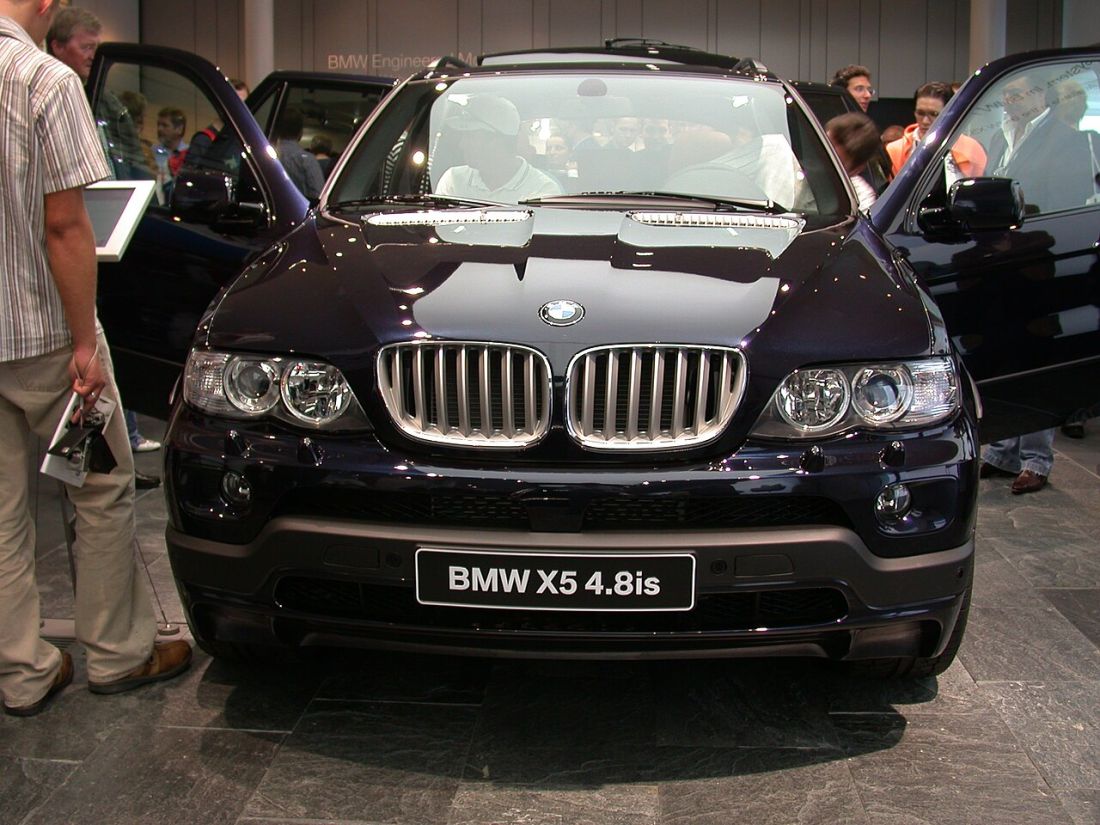
Photo: BMW X5 4.8is by Vitae, CC BY-SA 2.0 DE, via Wikimedia Commons.
The regular X5 had already changed expectations, but BMW soon pushed the formula further. The X5 4.6is arrived in the United Kingdom in 2002 as the range-topping model. It had twenty-inch wheels, much wider rear tyres, flared wheel arches, revised body details, and suspension settings made for faster road driving. BMW also kept the downhill control system, stability aids, and off-road functions, which showed that the company didn’t want the faster model to become a one-trick machine. It still had to tow, carry, climb, and deal with poor surfaces. Then came the X5 4.8is in 2004, continuing the same idea with a larger engine and another step in pace. These cars are important because they created a shape for later performance SUVs. Start with a practical premium model. Add a stronger engine, larger brakes, broader tyres, firmer body control, and a slightly more aggressive look.
Keep the useful cabin and everyday comfort. That recipe now appears across many brands, but the early fast X5 models helped make it normal. They also showed that buyers would accept visual clues without needing a full racing-car costume. The 4.6is looked tougher and lower, yet it was still clearly an X5. The changes had a job. Wide tyres helped place the engine’s output on the road. Bigger wheels made room for serious brakes and sharpened the stance. Revised suspension reduced unwanted body movement. None of that changed the basic truth that this was a large family vehicle. That contrast was the attraction. You could load bags into the back, take relatives out for lunch, then enjoy the road home once the traffic cleared. A modern performance SUV is expected to switch roles in exactly that way. The 4.6is and 4.8is didn’t finish the story, but they drew the outline in thick ink.
Other makers saw that sporty SUVs had a real audience
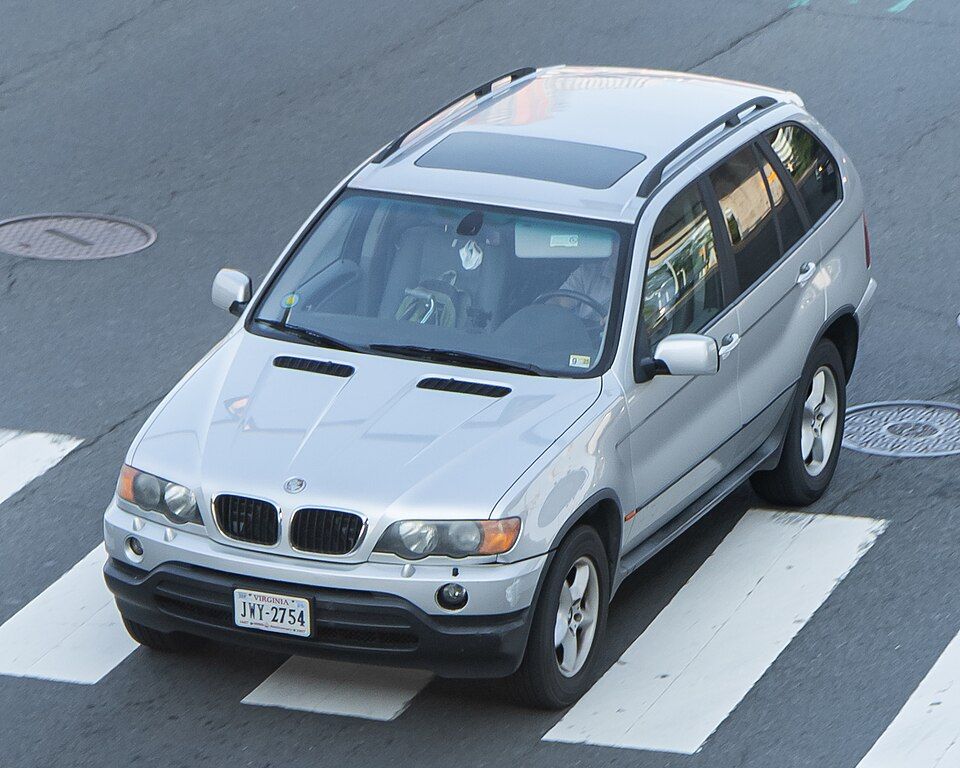
Photo: BMW X5 (E53) by OWS Photography, CC BY 4.0, via Wikimedia Commons.
The X5 wasn’t created in a vacuum, and it would be silly to claim that every sporty SUV exists because of one BMW. Premium four-wheel-drive vehicles had a long history before 1999, and several makers were exploring ways to mix luxury with stronger road behaviour. What the X5 did was make the road-focused premium SUV feel like a major category rather than a strange side project. BMW said that the model became an inspiration for a whole field of competing all-wheel-drive vehicles. The timing supports that view. Porsche introduced the Cayenne in 2002, and Porsche’s own history says the model became a key part of the company’s success. Audi unveiled its first SUV, the Q7, in 2005, while the Range Rover Sport also appeared that year with a clear focus on luxury, off-road skill, and a more engaging feel for the driver. Each brand used its own style.
Porsche leaned hard into sports-car character. Range Rover mixed road pace with serious rough-ground ability. Audi focused on space, technology, and secure all-weather travel. BMW’s role was to prove that a large audience wanted this blend. The first X5 passed 845,000 global sales within its first decade, according to BMW. That’s a lot of buyers voting with their wallets. Once sales reach that level, competitors stop seeing the idea as a risk and start seeing an important gap in their range. The result was a shift across the car market. Large premium SUVs became quicker, firmer, and better controlled. Sports-car makers began building tall family vehicles. Luxury brands that had once relied on saloons and estates added several SUV sizes. And buyers started asking a harder question: why should a useful car be dull to drive? That question still drives the category. The answer changes with each brand, but the X5 helped make sure the question was asked in the first place.
The second generation made the formula easier to live with
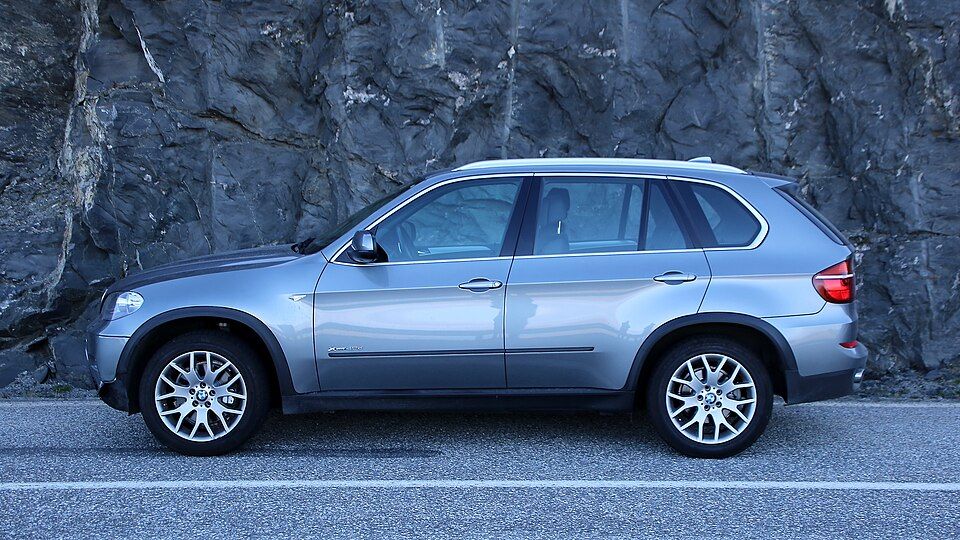
Photo: BMW X5 (E70) xDrive 40d by Mark König, CC BY-SA 4.0, via Wikimedia Commons.
The second-generation X5 arrived in 2006 and grew the practical side of the idea. BMW added extra space, richer cabin features, newer driver aids, and the option of seating for seven people. It also used BMW’s electronically controlled four-wheel-drive system, which could vary how the engine’s effort was shared between the front and rear wheels. The key point isn’t the system name. It’s what the driver felt. The car could react to changing grip while keeping the steady, rear-led character people linked with BMW. This generation showed that the performance SUV didn’t have to choose between family duty and driving appeal. It could move closer to both at the same time. That sounds obvious now, but bigger vehicles can easily lose the sharp feel that made the first model interesting. Extra seats, added equipment, and more comfort bring extra weight.
Engineers then have to work harder on steering, suspension, brakes, and body control so the car doesn’t feel lazy. BMW kept developing those areas, and the X5 became a stronger all-rounder. Think of a weekend that starts with a Friday commute from Manchester, includes a Saturday football run with children and kit, then ends with a Sunday trip into the Peak District. A vehicle like the second X5 could cover each job without asking the owner to keep a separate car for fun. We’ve all been there, trying to make one purchase cover several needs. The X5’s success came from taking that real-life problem seriously. It wasn’t enough to build a fast vehicle with a large boot. The rear seats had to be useful. The ride had to work in traffic. The cabin had to stay quiet on a long trip. The car also needed the grip and control to feel secure when the weather turned grim. By improving the practical parts while keeping the road-focused character, the second generation helped turn a new idea into an established class.
The 2009 X5 M completed the modern template
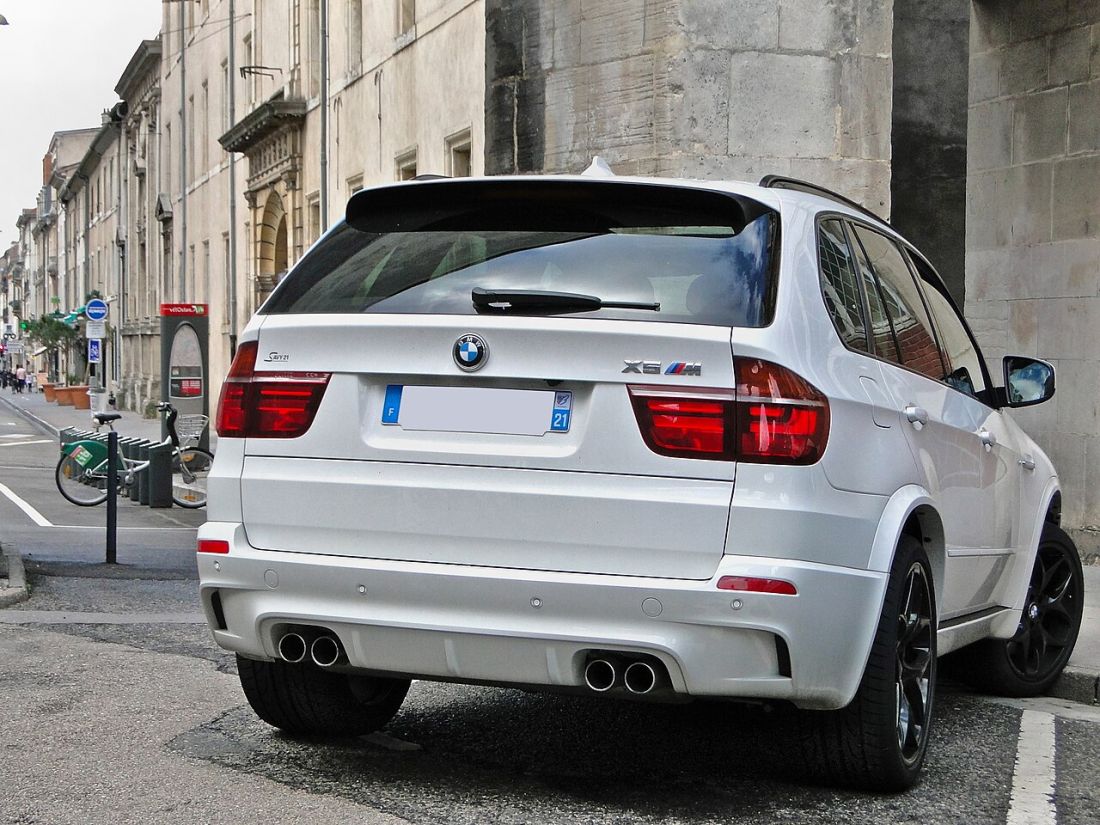
Photo: BMW X5 M (E70) by Alexandre Prévot from Nancy, France, CC BY-SA 2.0, via Wikimedia Commons.
The biggest step came in 2009 with the first BMW X5 M. This was the first time BMW’s specialist M division had applied its full treatment to an all-wheel-drive X model. The result was a large SUV that could reach 62 miles per hour from rest in 4.7 seconds, a figure BMW compared with the M3 sports saloon of the period. It sat ten millimetres lower than a regular X5, used stiffer springs, active control to reduce body lean, large twenty-inch wheels, and a system that could send more drive to the wheel best placed to help the car turn. Yet it kept a luggage area that could grow from 620 to 1,750 litres. That last figure is what makes the X5 M so important. A very quick car is nothing new. A large family vehicle with sports-car pace, serious cornering hardware, premium comfort, and a useful boot was still a striking idea in 2009.
The X5 M tied all those pieces together and gave the modern performance SUV its clearest early form. It also challenged an old belief that a true driver’s car had to be low, rear-driven, and fairly light. The X5 M was tall, heavy, and driven through all four wheels, yet BMW treated those facts as engineering problems rather than reasons to give up. The result wasn’t delicate like a small coupé, and it didn’t need to be. Its appeal came from the surprise.
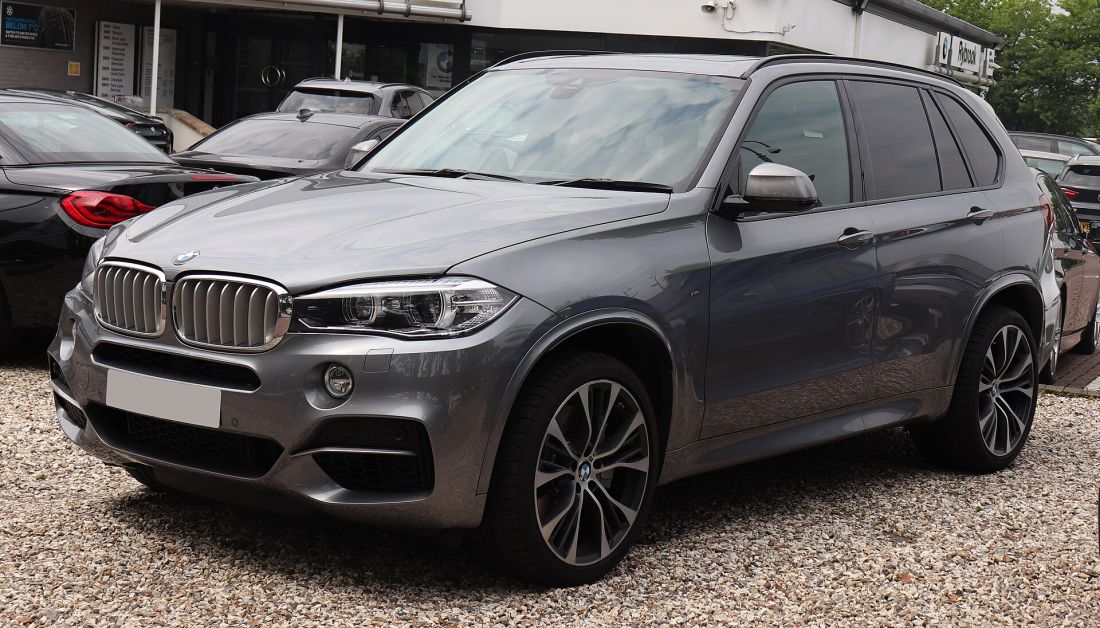
Photo: 2018 BMW X5 M50d (F15) by Vauxford, CC BY-SA 4.0, via Wikimedia Commons.
A vehicle that looked ready for a family holiday could accelerate and turn with the urgency of a serious sports saloon. That contrast became the sales pitch for a whole class of later vehicles. Today, buyers can choose fast SUVs from BMW, Porsche, Mercedes-Benz, Audi, Alfa Romeo, Jaguar, Land Rover, and several other makers. The X5 M helped set the standard they’re still measured against: pace without giving away space.
What today’s performance SUVs still borrow from the X5
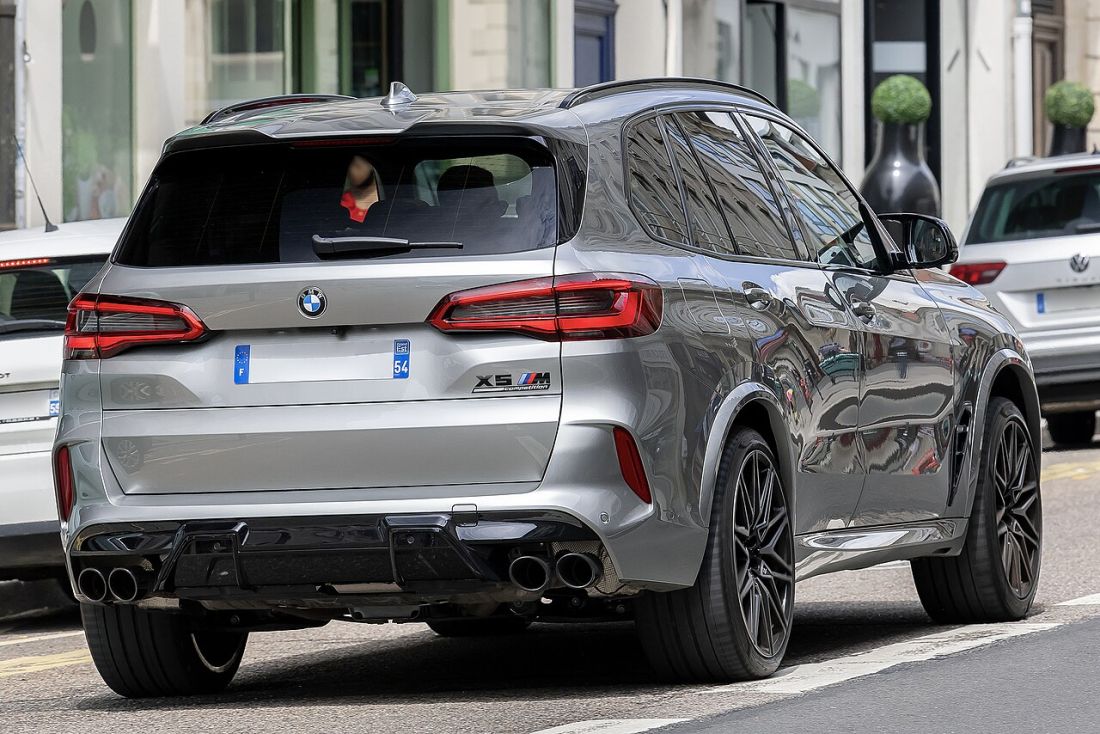
Photo: BMW X5 (G05) M Competition (pre-LCI) by Alexandre Prevot from Nancy, France, CC BY-SA 2.0, via Wikimedia Commons.
Look at a current performance SUV and you’ll see the same basic ideas, even if the technology has changed. There’s usually a strong petrol, diesel, hybrid, or electric drive system. Four-wheel drive helps put the engine or motor’s effort onto the road. The suspension is controlled to reduce leaning in bends, while driving modes let the owner choose a softer or firmer feel. Large brakes deal with the speed and weight. Broad tyres add grip. The cabin stays practical, quiet, and well equipped. The outside gets bigger air openings, larger wheels, deeper bumpers, and a few badges, but the useful body shape remains. That combination can be traced through the X5’s development from the first 1999 model, through the 4.6is and 4.8is, to the X5 M. The details changed, but the aim stayed steady. Make a large vehicle respond with the confidence of a smaller car, then keep enough comfort and space for normal life.
There’s a catch, of course. Fast SUVs ask a lot from tyres, brakes, suspension parts, cooling systems, and servicing. A used example can look good and still need expensive work if a previous owner skipped maintenance. At Dace Motor Company, we’d tell any buyer to check the service record closely, look for matching quality tyres, listen for knocks over rough roads, and make sure warning lights go out as they should. Check that the brakes feel smooth, the steering tracks straight, and every electronic feature works. A full vehicle history check matters too, especially on an expensive model that may have changed hands several times. None of this is meant to put you off. It’s the same common-sense care you’d use with any complex premium car. The reward is a vehicle that can cover an unusually wide range of jobs. School run. Airport trip. Weekend away. A clear road over the hills. One set of keys, many roles.
The X5 idea is still easy to recognise
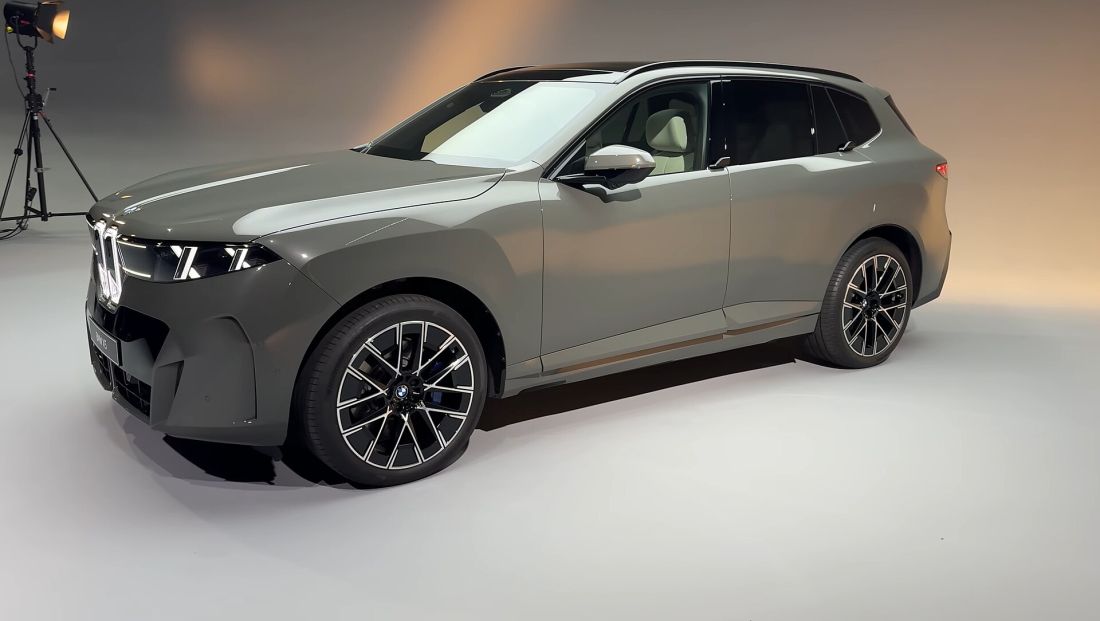
Photo: BMW iX5 (G65) by Autowizja, CC BY 4.0, via Wikimedia Commons.
The BMW X5 helped create the modern performance SUV because it changed the order of priorities. Older off-road vehicles were judged first by toughness and rough-ground skill. Premium saloons were judged by comfort, finish, and road manners. Sports cars were judged by speed and response. The X5 pulled those expectations into one vehicle and asked buyers to accept fewer compromises. The first model made the road-focused premium SUV believable. The 4.6is and 4.8is showed that the same shape could support much faster versions. The second generation added space and family flexibility. Then the X5 M proved that a full performance model could keep a proper boot, a high seating position, four-wheel-drive confidence, and genuine pace. That sequence matters.
It didn’t happen in a single dramatic moment. BMW kept adding pieces until the category we know now was sitting in plain sight. You can see the result around Manchester and Stockport every day. Fast SUVs are used for commuting, shopping, school runs, long motorway drives, and weekends away. Most will never visit a race circuit or cross a rocky trail. That’s fine. Their value comes from being ready for several kinds of day, while still giving the driver something to enjoy. The X5’s deepest influence isn’t a certain engine size, badge, or lap time. It’s the belief that practicality and driving character can live in the same large vehicle. Plenty of newer models are quicker, cleaner, quieter, or filled with newer screens and driver aids. They’re still following the path the X5 helped clear in 1999. And that’s why the original BMW remains such an important car. It didn’t simply join an existing class. It helped turn a loose collection of ideas into one of the biggest and most recognisable parts of the modern car market.