


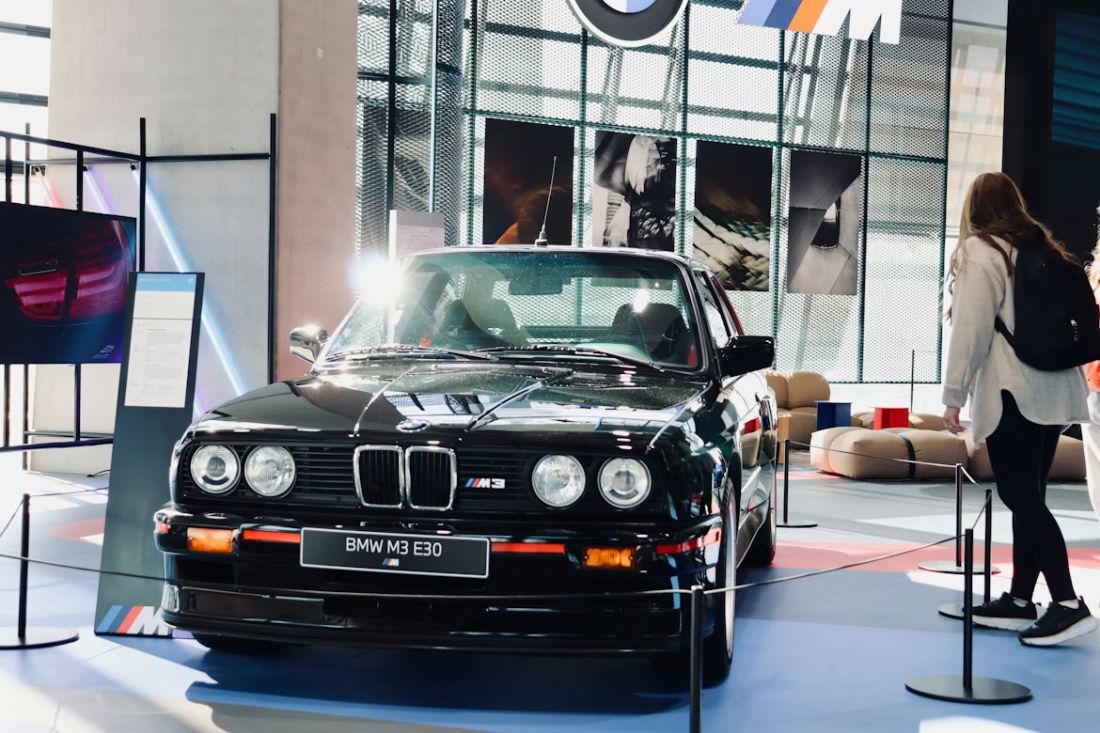
BMW E30 M3: How Motorsport Created a Road-Car Legend
You know how some cars just seem to carry a bit of magic with them? The BMW E30 M3 is one of those cars. Even people who aren’t massive car fans seem to pause when one pops up at a show, in a video, or parked somewhere looking square, low, and slightly moody. It doesn’t shout like a supercar. It doesn’t need to. It has that “I’ve got stories” look. At Dace Motor Company, we’ve seen plenty of used BMW models come and go over the years, and one thing never really changes: the M badge means something to people. The E30 M3 is a big reason why.
This wasn’t a normal BMW 3 Series with a sporty badge stuck on the back. It was created because BMW wanted to win races. Simple as that. In the mid-1980s, racing rules said BMW had to sell at least 5,000 road-going versions within twelve months if it wanted the race car to qualify. So the road car existed because the race car needed it. That’s a bit like being told you can only play for the school team if you build 5,000 copies of your trainers and sell them first. A weird rule, but a brilliant result for the rest of us. BMW showed the M3 to the public in 1985, and the car went into production in 1986. It ran until 1991, and almost 18,000 were sold in total. Not bad for a car that began life as a racing permission slip.
It started with a racing rule, not a showroom idea
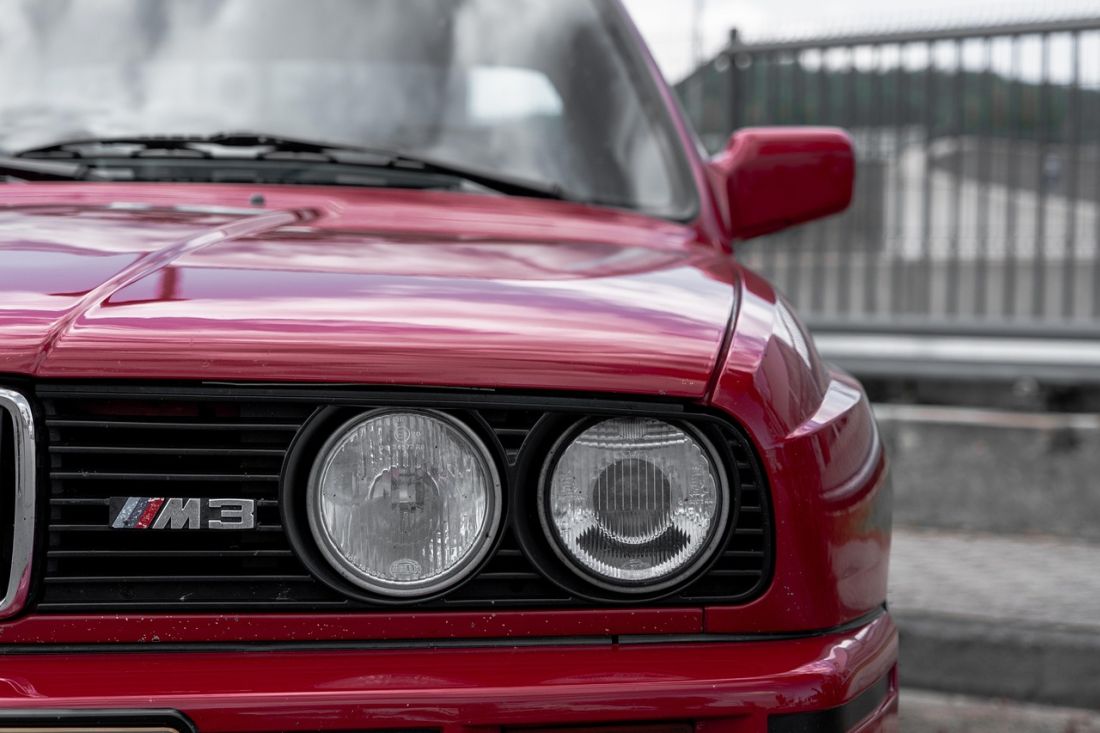
The E30 M3 came from a rule called Group A. No need to make that sound more complicated than it is. Group A was a racing class where car makers had to base their race cars on real cars people could buy. The idea was to stop brands from building wild machines that only looked a tiny bit like showroom cars. So, if BMW wanted to race a 3 Series, it had to build a proper road version with the right shape, the right engine layout, and enough shared ideas to make it count. That’s why the E30 M3 feels so different from a normal E30 coupe. BMW didn’t just take a tidy 3 Series, lower it, fit bigger wheels, and call it a day.
The team changed huge parts of the car. BMW says the M3 kept little more than the doors and roof from the regular 3 Series. That tells you a lot. The arches were wider. The back window area was changed. The boot lid and spoiler were different. The bumpers and side skirts were made with lighter material. The suspension and brakes were chosen with racing in mind, but the car still had to work on the road. So yes, you could drive it to the shops, but it had been built with kerbs, hard braking, and flat-out laps in its bones. That mix is what makes the E30 M3 so interesting. It wasn’t pretending. It had a job to do, and the job was winning.
The shape wasn’t just for looks
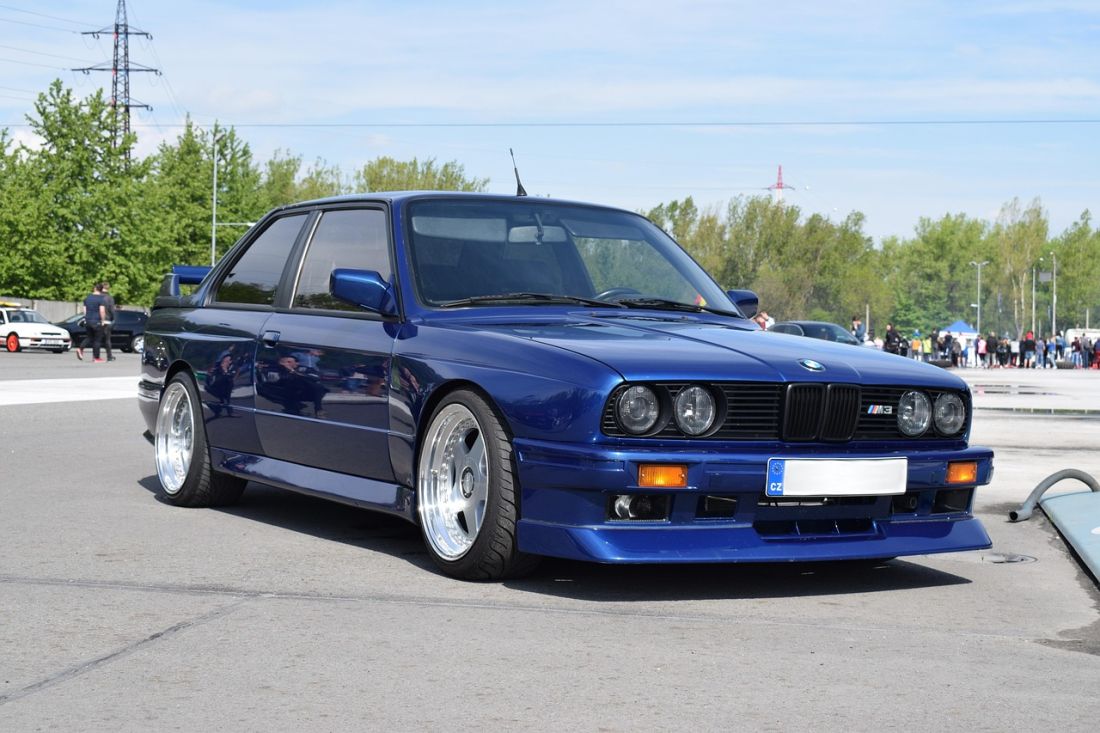
Look at an E30 M3 next to a normal E30 and the difference is clear straight away. It’s still boxy and neat, but it has wider hips, a deeper front end, and that famous rear wing. The funny thing is, none of that was there just to look cool outside a pub in Stockport on a Friday night. The shape had work to do. The wider arches made room for wider wheels, which helped the car grip better in corners. The rear wing helped air move over the car in a calmer way at speed. The flatter, wider rear pillar helped the car cut through the air more cleanly.
Even the plastic parts helped keep weight down. It’s easy now to see all that and think, “Yeah, of course it looks like that.” But back then, a small saloon-based coupe with that much purpose in its bodywork felt pretty special. Imagine heading down the M60 in something this square and compact, with the sort of stance that makes modern cars look a bit bloated. It had presence, but not in a show-off way. It looked like the car equivalent of someone turning up to five-a-side in old boots and then running rings round everyone. No fuss. Just serious ability. BMW tested the car at the Nürburgring before production, then pushed it through a long high-speed test at Italy’s Nardo Ring. That tells you the shape and the mechanical bits weren’t there for a poster. They were there because the car had to cope when driven hard for a long time.
The engine was small, sharp, and full of character
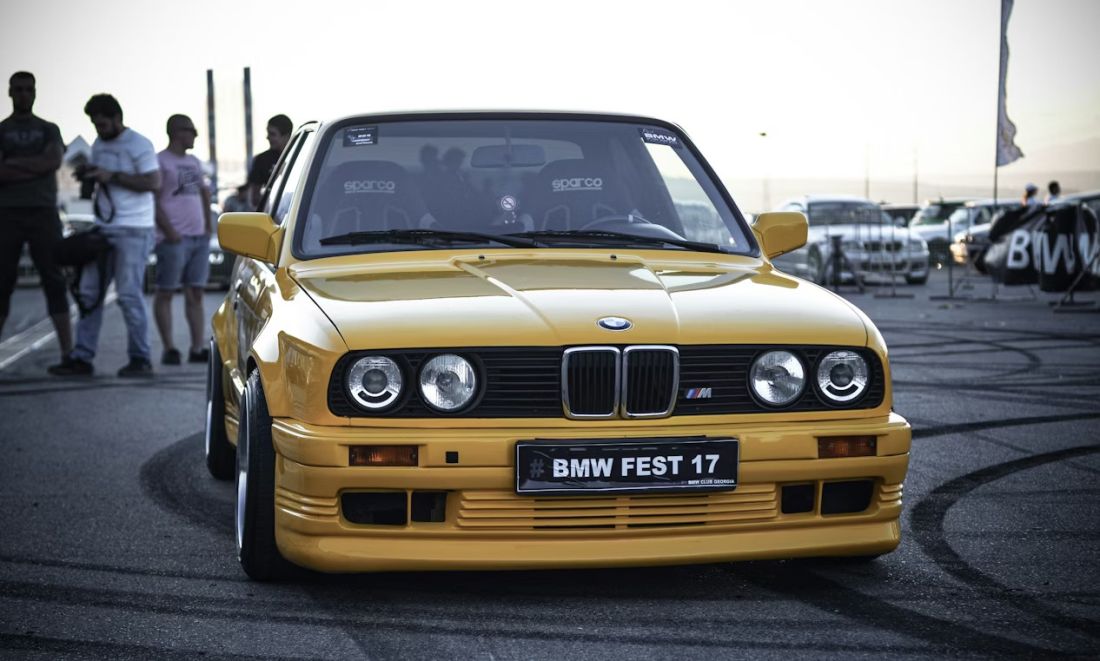
The E30 M3 didn’t use a huge engine. It didn’t need one. Under the bonnet sat a 2.3-litre, four-cylinder engine that loved to rev. Think of it like a fit boxer rather than a heavyweight. Quick feet, fast reactions, and no wasted movement. BMW started with a strong four-cylinder base from the 3 Series, then gave it a new head with four valves per cylinder, raised its size to 2.3 litres, and made it happy at high engine speeds. The first road car had 200 horses without a turbo or supercharger, which was a serious number for a compact car in the 1980s. With a cleaner exhaust set-up, it made 195 horses, so the drop was small.
The car weighed around 1,200 kilograms, which is light compared with many modern cars. That meant it could reach 100 kilometres per hour in 6.7 seconds and go on to 235 kilometres per hour. Numbers are only part of it, though. The real charm was how it delivered its shove. You had to work with it. Let it rev. Keep it keen. That’s very different from a modern fast car where you touch the throttle and the car just fires forward. The E30 M3 wanted you involved. It asked you to pay attention, a bit like driving over to Glossop on a wet day and knowing the road surface can change from fine to slippery in about three seconds. That’s where the fun was. You weren’t a passenger in the experience. You were part of it.
Then the race car backed it all up
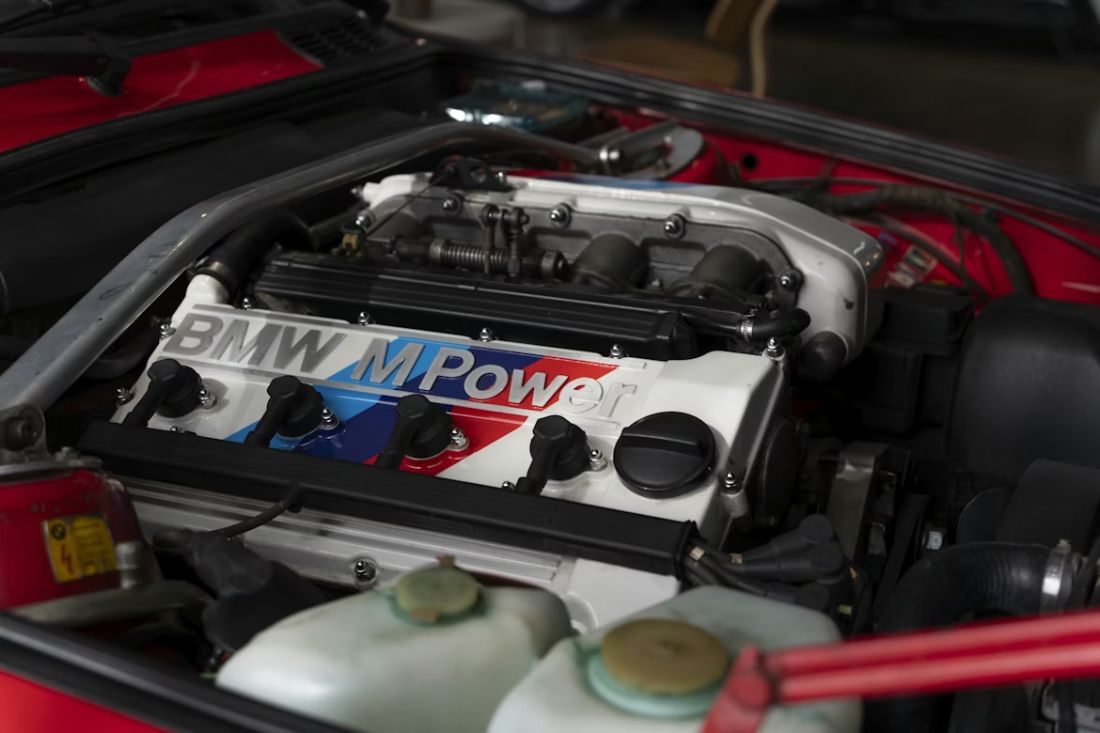
Here’s the bit that turns the E30 M3 from “cool old BMW” into something much bigger. The race car won. A lot. In 1987, the racing version was built for the first World Touring Car Championship, and BMW says it made 300 horses at 8,200 revs. That’s wild for a small four-cylinder from that time. Roberto Ravaglia won the World Touring Car title in the M3 in its first year. “Winnie” Vogt took the European title for BMW, and Eric van de Poele won the German title in an M3 as well. That’s not a gentle start.
That’s kicking the door open. BMW Group Classic says the car went on to take one world title, two European titles, over 60 national titles, seven European hill-climb titles, and five Rally Cups. It also took eight wins at the 24-hour races at Nürburgring and Spa-Francorchamps. Read that again and it almost sounds made up, but that’s why the car’s reputation is so strong. This wasn’t just a nice road car with a lucky racing season. It became one of the greatest touring cars ever made. And because the road car was so closely linked to that effort, owners could feel they had a small slice of the same story on their driveway. Maybe not with race stickers, pit crews, and champagne, but still. The link was real. That matters. Car people can smell fake heritage a mile off. The E30 M3 didn’t need to borrow anyone else’s glory. It had its own.
Why it felt special on the road
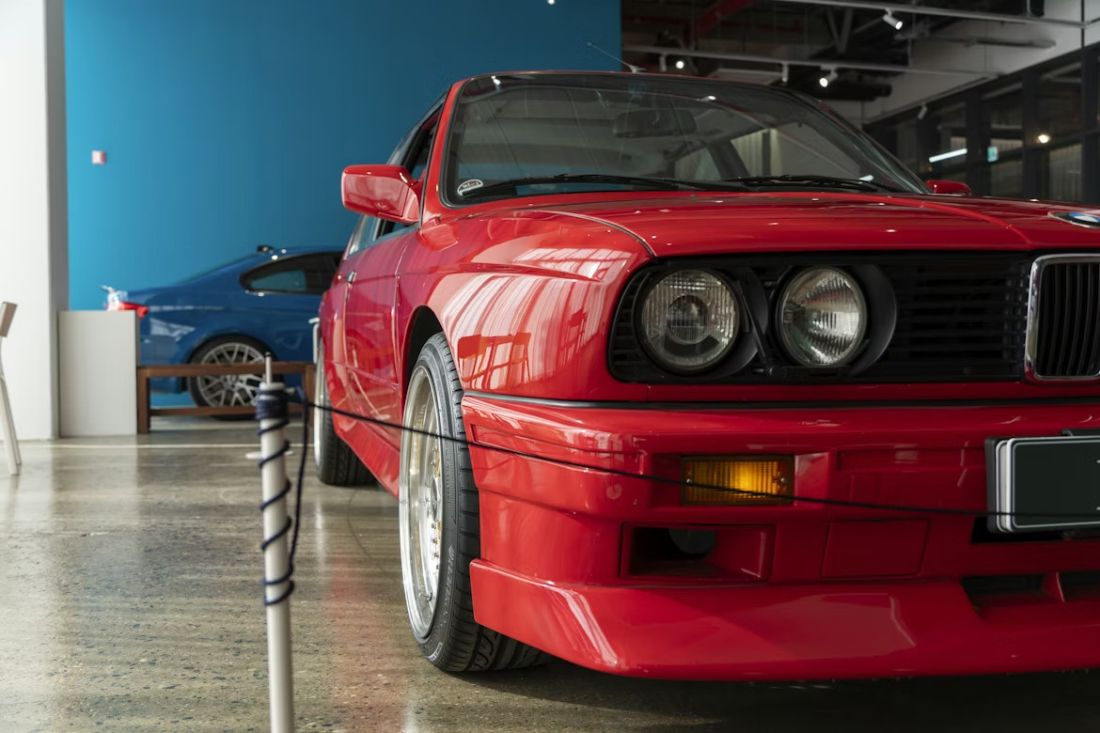
The road-going E30 M3 wasn’t perfect in the soft, cosy sense. And that’s kind of the point. It had a manual gearbox with first gear down and to the left, a layout linked with racing. That sounds like a tiny detail, but tiny details can change how a car feels. You get in, grab the gear lever, and straight away you know this isn’t the same as a regular shopping car. The brakes were stronger. The suspension was firmer and set up with fast driving in mind. The steering was full of feel. The engine wanted to be used properly. Some cars are about comfort first, then fun if there’s time. The E30 M3 had that the other way round.
But it still worked as a road car, which is why people loved it so much. You could drive it through town, park it outside a house in Reddish, and then, on the right road, it would wake up like it had been waiting all week. Let’s face it, that’s a dream mix. We’ve all had cars that look the part but feel a bit flat once the novelty wears off. The E30 M3 did the opposite. The more you knew about it, the better it got. The more you drove it, the more sense it made. It had a clean kind of excitement. No huge screens. No silly theatre. Just a steering wheel, pedals, a rev-happy engine, and a chassis that wanted to talk back. You don’t need to be a racing driver to get why that’s appealing. You just need to enjoy driving.
The Evolution cars made the story even richer
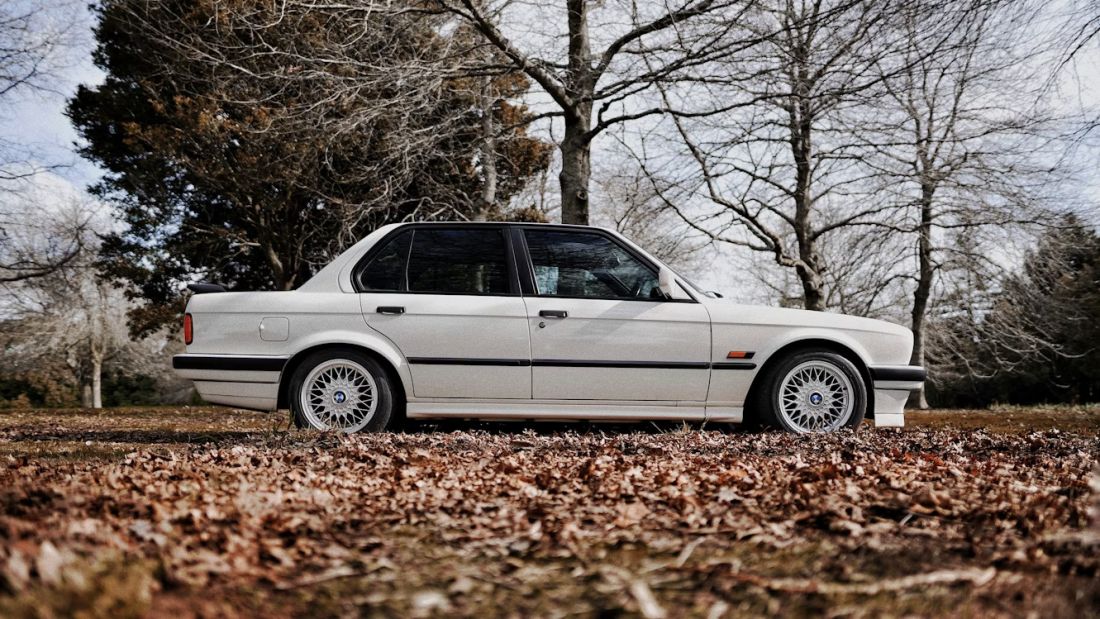
BMW didn’t freeze the E30 M3 in one form. Racing kept moving, so the road car had to move with it. That’s where the Evolution models come in. The first Evolution version arrived because BMW needed to approve changes for racing, and the technical changes were subtle enough that the car looked much like a standard M3. BMW Group Classic says that version could be spotted by small details, like an “E” mark on the cylinder head and other engine clues. Later, the Evolution II pushed things further, with BMW M saying the 1988 model made 220 horses and could reach 243 kilometres per hour. Then came the Sport Evolution in 1990, the one many fans get properly misty-eyed about.
That car had a bigger 2.5-litre engine and 238 horses, plus adjustable front and rear aero parts and special one-piece racing seats. Only 600 Sport Evolution models were made, which is why they’re now so sought after. There were also special editions linked to racing success, including the Europameister, Cecotto, and Ravaglia cars. The Europameister celebrated the 1988 European Touring Car Championship title, while the Cecotto and Ravaglia cars honoured star drivers linked to the M3’s story. This is where the E30 M3 becomes a bit like a famous band with rare early singles, live recordings, and limited pressings. The main album is already loved, but the special versions give collectors something else to chase. And yes, prices now can be eye-watering. You could probably hear the sharp intake of breath from Deansgate to Stockport Viaduct.
Why Manchester and Stockport car people still get it
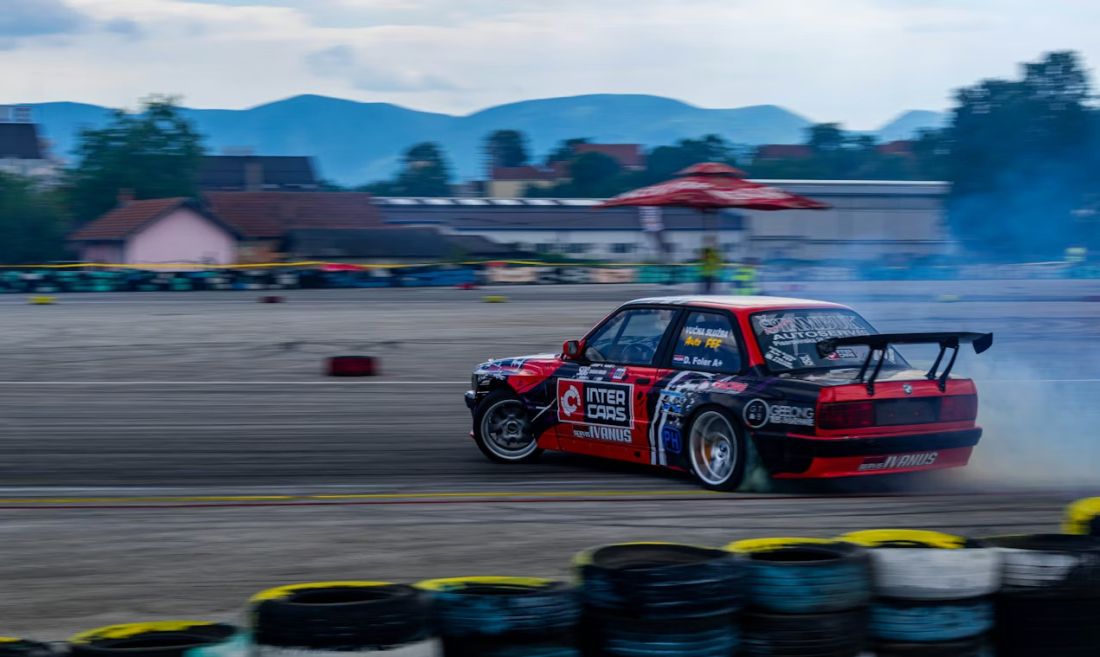
Around Manchester and Stockport, people tend to appreciate cars that have a bit of honesty about them. Something that does what it says. Something that feels useful, characterful, and built for real roads rather than just brochure photos. That’s why the E30 M3 still lands well here. It’s compact enough for tight streets, lively enough for a Sunday run, and purposeful enough to make you glance back after parking. Picture one burbling past the old mills, under grey skies, with rain hanging in the air because, well, it’s Greater Manchester and of course it is. It fits. The car’s shape has that no-nonsense 1980s look, but the story behind it gives it warmth. It wasn’t made to impress at a red-carpet event.
It was made because BMW wanted to beat Ford, Mercedes, and everyone else on track. That’s a proper reason. At Dace Motor Company, we deal with modern used cars rather than museum pieces, but the E30 M3 still teaches a lesson that applies to plenty of cars we see every day. The best cars have a clear purpose. A good BMW should feel balanced and eager. A good hot hatch should feel playful. A good family sport utility vehicle should make daily life easier without feeling dull. The E30 M3 is a reminder that the badge matters less than the thinking behind the car. When the thinking is right, people remember. Decades later, they still talk about it over brews, in garages, at car meets, and yes, while scrolling listings they probably shouldn’t be looking at during lunch. We’ve all been there.
What the E30 M3 teaches us before buying any used BMW
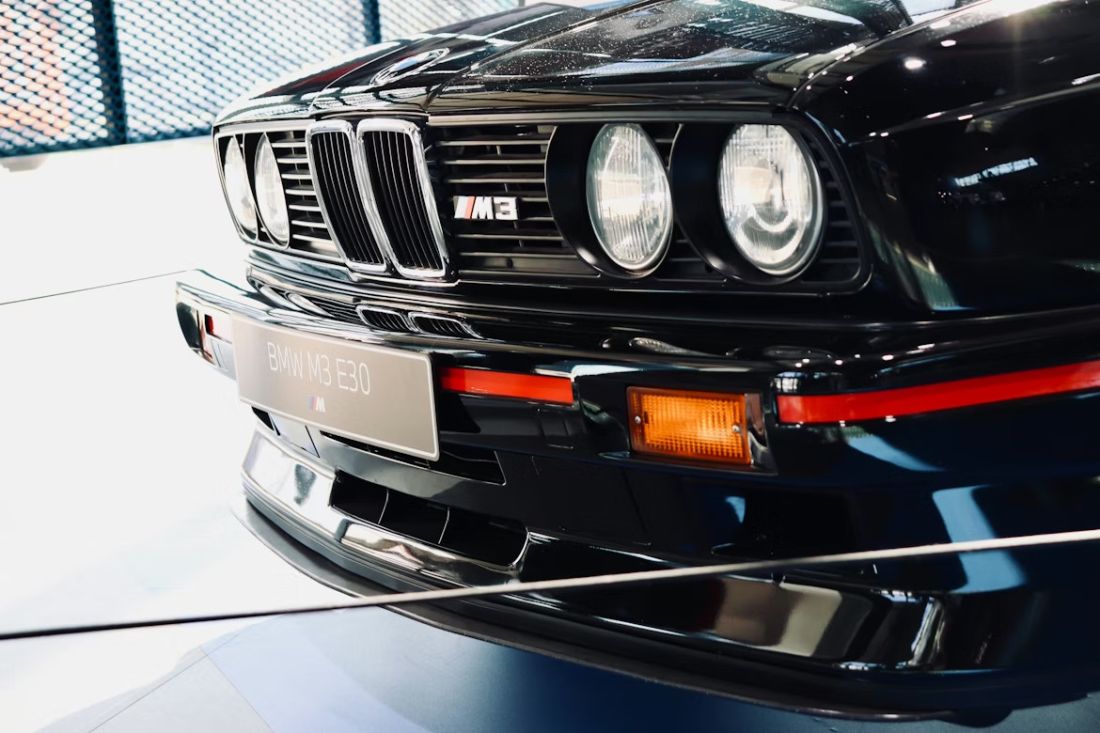
Most people reading this won’t be buying an E30 M3 next week. The rare ones are now collector cars, and buying one needs serious checks, specialist knowledge, and a calm head. But the lesson behind it is useful for anyone looking at a used BMW, whether it’s a 1 Series, 3 Series, 5 Series, or something bigger. Don’t just get pulled in by the badge. Look at the history. Ask how the car has been cared for. Check that servicing has been done on time. Look at tyres, brakes, suspension, warning lights, and paperwork. A car with a sporty name can still be tired underneath. To be honest, that’s where a lot of buyers get caught out.
The shiny paint and smart wheels do the talking, and the boring checks get pushed aside. But those boring checks are what save money later. At Dace Motor Company, every vehicle is HPI checked before sale, which helps flag things like outstanding finance, mileage issues, stolen vehicle records, and insurance write-off history. That kind of check won’t turn a normal car into an E30 M3, sadly, but it can help you buy with a clearer head. And if you’re looking at used car finance, a soft search that has zero effect on your credit score can be a handy first step before making a decision. The E30 M3 became a legend because BMW cared about the details that mattered. That same idea works when buying any used car. Get the right car, with the right checks, from people who’ll answer straight questions. No drama. No guesswork. Just a better way to buy.
The reason the legend stuck
The E30 M3 still matters because it feels real. That’s the heart of it. It wasn’t built to chase likes, because likes weren’t a thing. It wasn’t built to look angry in a finance advert. It was built because racing rules forced BMW to make something special for the road. Then racing proved the idea was brilliant. The road car had the looks, the engine, the handling, and the connection to the track. The race car brought home the titles. Together, they made the M3 name mean something. Every M3 since has lived in that shadow, even the much faster ones. And yes, modern M cars are quicker, safer, cleverer, and much easier to live with every day. But the E30 M3 has a purity that’s hard to fake. It’s small. It’s focused. It asks the driver to join in. That’s why people still care. That’s why it appears on bedroom posters, in dream garages, at classic shows, and in conversations between people who really should be talking about something else. So next time you see an old square BMW with swollen arches and a proud little M3 badge on the boot, give it a second look. It’s not just an old car. It’s a bit of racing history that somehow made it onto normal roads. And honestly, that’s still pretty special.