


The Weirdest Audi Concept Cars Ever Created
Audi has built plenty of cars that look calm, clean and sensible. You can picture one slipping through Stockport in the rain, sitting neatly in traffic on the A6, or rolling into Manchester without shouting for attention. Then you look through Audi’s concept-car history and find something very different. There are cars shaped like silver spaceships, cars with engines that were never really there, cars that can make themselves longer, and one that turns its rear end into a small pickup bed. That’s the fun of a concept car. It doesn’t have to be ready for the school run, a supermarket car park or a wet crawl along the Mancunian Way. It’s there to test an idea, start an argument and make people stare. Some concepts hint at real cars that appear a few years later. Others vanish after the motor-show lights go out, leaving behind a few photos and a lot of “what on earth were they thinking?” comments. At Dace Motor Company, we’re used to seeing the practical side of Audi ownership through used cars at our Stockport and Manchester sites, so these one-off machines make a brilliant change of pace. They show what happens when designers get room to be brave, silly, clever and a little bit stubborn. We’ve picked seven of the weirdest Audi concepts, though “weird” isn’t an insult here. It means memorable. It means a car still gets talked about years later, even though nobody ever drove one home from a showroom. And, let’s face it, sensible cars have their place. But every now and then, you want to see an Audi that looks as if it has just landed outside the Trafford Centre from another planet.
Audi Avus quattro, the polished spaceship from 1991
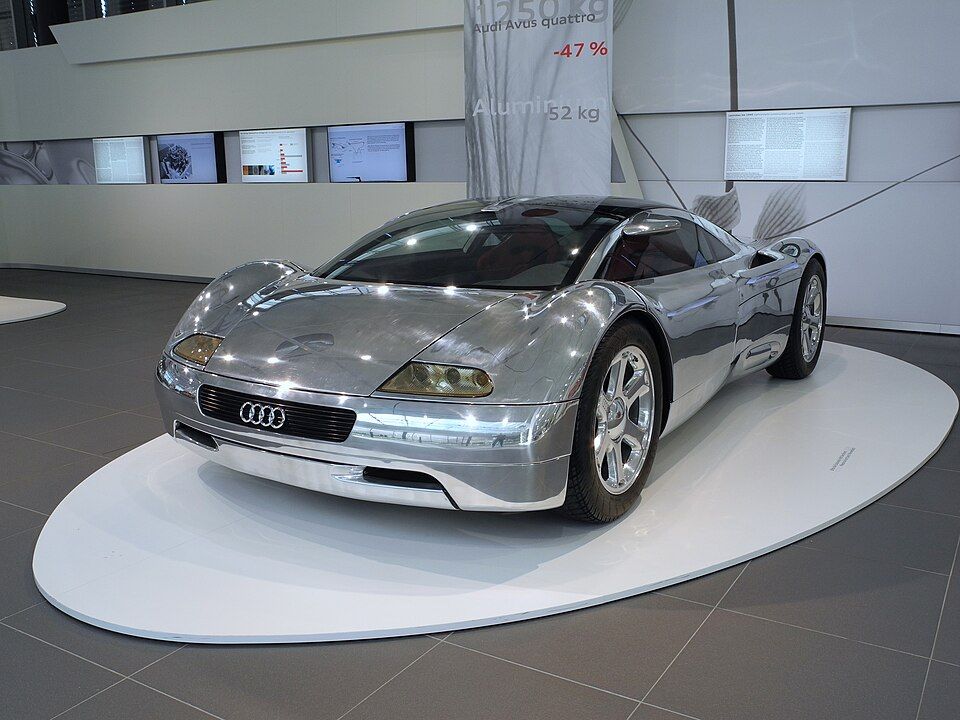
Photo: Audi Avus quattro by Hubert Berberich (HubiB), Public domain, via Wikimedia Commons.
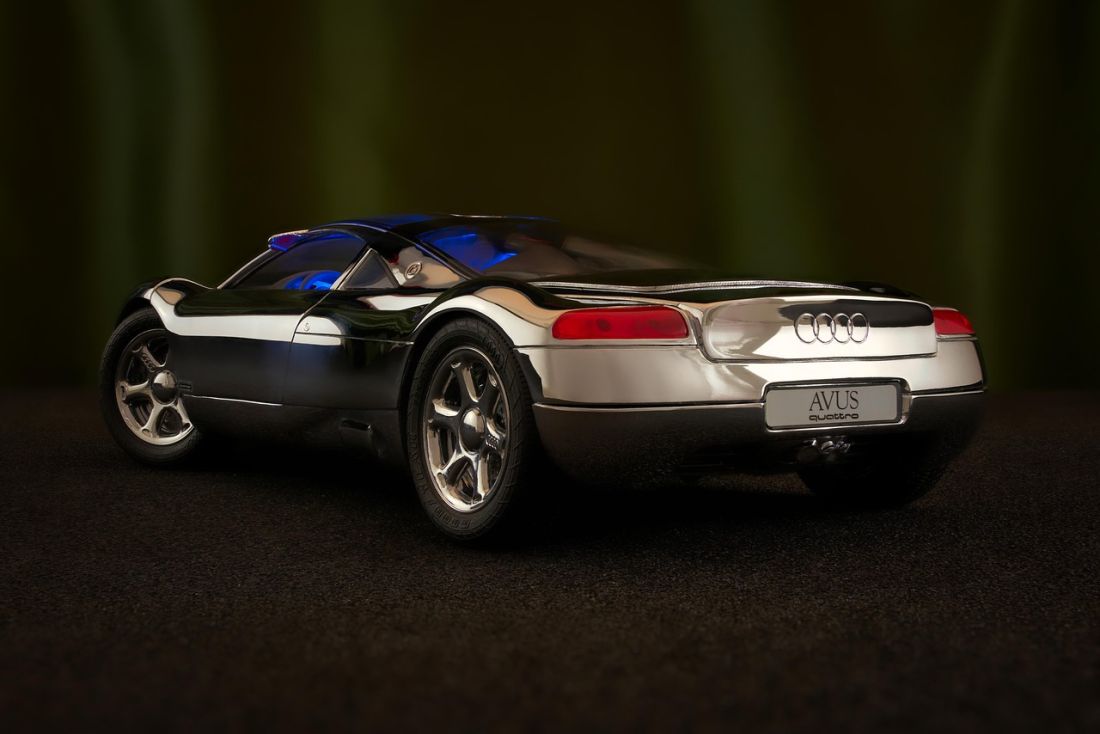
The Audi Avus quattro looked unreal in 1991, and it still looks unreal now. Its body was bare, polished aluminium, so it had the shine of a giant metal sculpture rather than a normal painted car. The shape was low and smooth, with huge rounded wheel covers and a cabin pushed far forward. From some angles, it’s genuinely tricky to tell which end you’re looking at. That alone earns it a place here. Audi showed the Avus at the Tokyo Motor Show as a sign of where its design and lightweight metal construction might go next. The idea was serious, even if the finished object looked like it belonged in a science-fiction film. Audi planned a twelve-cylinder engine behind the seats, visible through a clear cover. Here’s the funny bit: the show car didn’t have the finished engine.
The unit on display was a carefully made dummy built from wood and plastic, then painted to look convincing. Imagine opening the bonnet of your dream car and finding a very expensive school craft project. Still, the Avus mattered. Audi used it to show how aluminium could help make a large, fast car lighter, and the company later used aluminium construction in the production A8. It also helped set the mood for Audi sports cars that followed. You can spot a little of the later TT in its smooth curves, while the basic idea of a dramatic mid-engined Audi pointed far ahead. Weirdest detail? Probably the mix of honesty and theatre. The metal body was a real statement about future manufacturing, while the grand engine under glass was basically a prop. That’s concept-car life in one neat picture. Half engineering workshop, half stage show. Park it near Manchester Central today and people would still gather around it, phones out, trying to work out whether it was built last week or thirty-five years ago.
Audi Project Rosemeyer, a 1930s racer sent into the year 2000
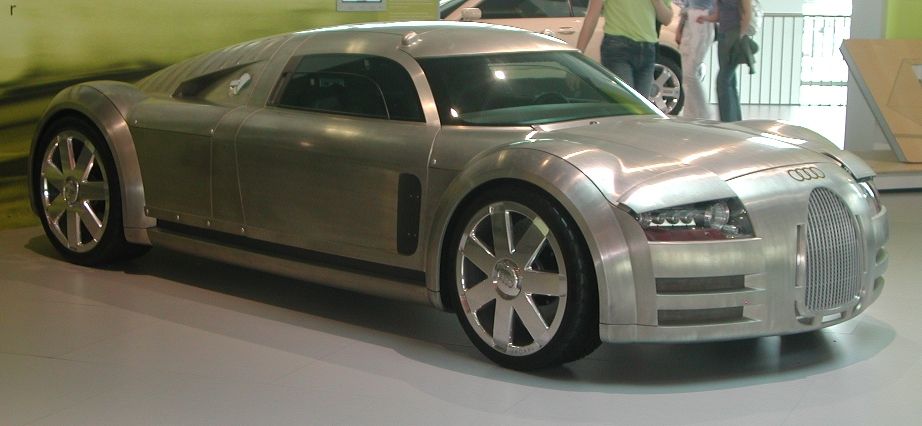
Photo: Audi Rosemeyer by Lord van Tasm, CC BY-SA 3.0, via Wikimedia Commons.
The Project Rosemeyer arrived in 2000 looking like someone had mixed a pre-war racing car, an Audi TT and a deep-sea creature. Its front grille stood tall and narrow, the wheels sat under huge rounded arches, and the roof looked tiny beside the broad body. It was named after Bernd Rosemeyer, the famous Auto Union racing driver who became a star in the 1930s. Audi shaped the car as a tribute to the silver Auto Union racers of that period, but it didn’t create a gentle museum piece. The Rosemeyer was meant to feel intimidating. Audi described a naturally breathing, sixteen-cylinder engine with a capacity of eight litres, mounted behind the cabin and driving all four wheels. The claimed top speed was about 217 miles per hour, although the concept wasn’t a fully working road car, so that figure stayed on paper.
The cabin was just as odd. It mixed brown leather, exposed metal, a large central dial and a gated gear lever, giving the driver the feel of an old racing machine without copying one exactly. There’s a slightly grumpy expression to the front, too. The small lamps and tall grille make it look as if the car has just been told it can’t park on Deansgate. Yet that awkward face is part of its charm. Plenty of concepts look smooth but forgettable. The Rosemeyer doesn’t. It feels heavy with history, but also very much like a product of the year 2000, when car makers were dreaming about enormous engines and impossible top speeds. It never reached production, and perhaps that saved it. A road version would have been hugely expensive and difficult to tame. As a one-off statement, though, it works. Strange. Serious. A bit menacing. Exactly the sort of machine you’d remember after seeing hundreds of safer designs.
Audi Steppenwolf, the off-road TT with a removable roof
The Steppenwolf sounds like a heavy metal band, and the car looked ready to carry their gear up a muddy hill. Audi showed it at the Paris Motor Show in 2000, presenting a compact three-door machine that mixed sports-car curves with chunky off-road details. The easiest way to picture it is an early Audi TT that has put on hiking boots, raised its suspension and decided to spend the weekend near Kinder Scout. It had wide wheel arches, tough-looking lower body panels and a short, rounded cabin. Yet it wasn’t just a styling trick. The car could raise or lower itself through several settings, helping it sit closer to the road or gain extra clearance over rough ground. Its roof could also be changed. Audi planned a removable hard section and a fabric alternative, so the Steppenwolf could shift from snug coupe to open-air oddball. There was even a rear drawer holding small running boards.
These could be fitted below the doors to help people climb up when loading items onto the roof. That’s such a specific idea that you can almost imagine the design meeting: “What if the car gets tall and the owner can’t reach the luggage?” “Easy, give it steps in a drawer.” The Steppenwolf used a 3.2-litre, six-cylinder petrol engine and four-wheel drive, but the engine isn’t what makes it interesting now. The mix of categories does. In 2000, compact crossover cars weren’t filling every street. Audi was playing with the idea before the shape became familiar. Today, a sporty raised Audi barely turns a head. Back then, this one looked like it couldn’t decide whether it wanted a racetrack, a rocky trail or a sunny promenade. Maybe it wanted all three. Drive it through Reddish on a grey morning and the removable roof might seem optimistic, but give Manchester ten minutes and the weather could change anyway.
Audi Urban Concept, the tiny two-seat pod with wheels outside
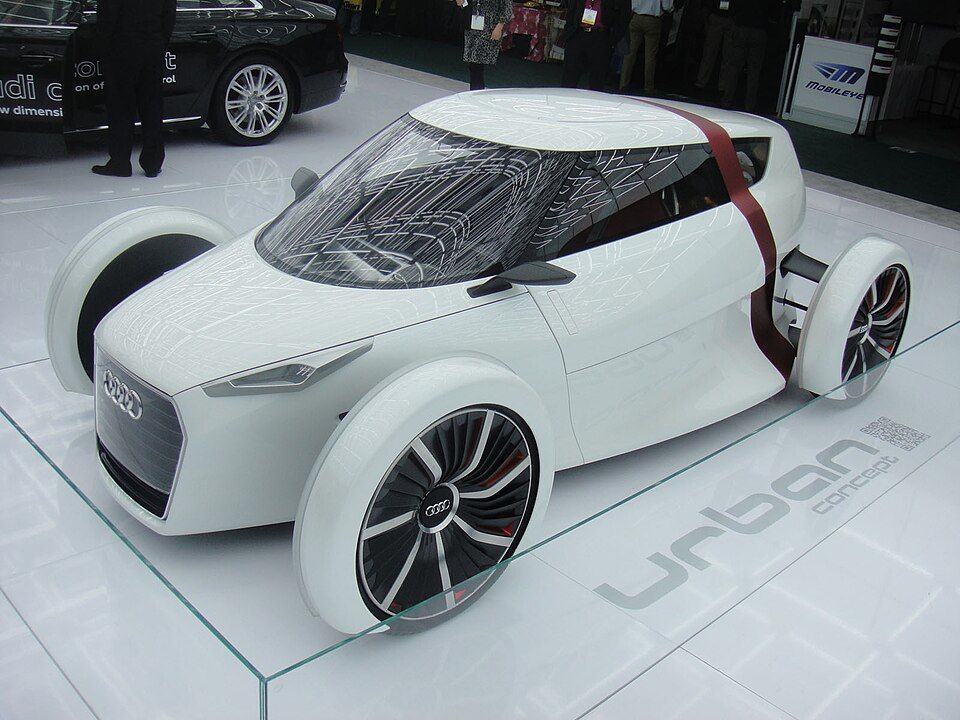
Photo: Audi urban concept car by The Conmunity - Pop Culture Geek from Los Angeles, CA, USA, CC BY 2.0, via Wikimedia Commons.
The 2011 Audi Urban Concept was small, light and gloriously peculiar. It didn’t look like a scaled-down family hatchback. It looked like a racing helmet on wheels. The four wheels sat outside the main body, covered by slim guards, while the passenger cabin formed a narrow pod in the middle. Entry was strange as well. Instead of opening normal side doors, the roof and upper body slid backwards so the occupants could climb in. Inside, there were two seats, but they weren’t lined up evenly. The passenger sat slightly behind the driver, which let Audi keep the body narrow without placing one person directly behind the other. Audi called the layout “one plus one,” though the basic idea is easy to grasp: two people, squeezed in cleverly.
The whole car weighed about 480 kilograms, far less than a normal modern car. It ran on electricity and was meant for busy city streets, not long motorway runs with a boot full of suitcases. In Manchester, its narrow shape might have looked handy around the Northern Quarter, right up until you tried to carry a week’s shopping or pick up two friends. Then the limits would become clear very fast. But that was the point. Audi was asking how little car a person truly needed for short city trips. The answer wasn’t a normal small Audi with a few bits removed. It was this low, exposed-wheel machine, somewhere between a road car, a kart and a covered scooter. There was also an open version without the fixed roof, which made the idea even braver for anyone living near Stockport. We all know how it is: bright sky at breakfast, sideways rain by lunch. The Urban Concept never became a showroom model, but it remains a great example of a company ignoring its usual shapes and starting with a blank sheet. No family grille stretched across a familiar body. No safe answer. Just a tiny electric pod asking whether city cars had become much bigger than they needed to be.
Audi Nanuk quattro, the diesel supercar that wanted muddy boots
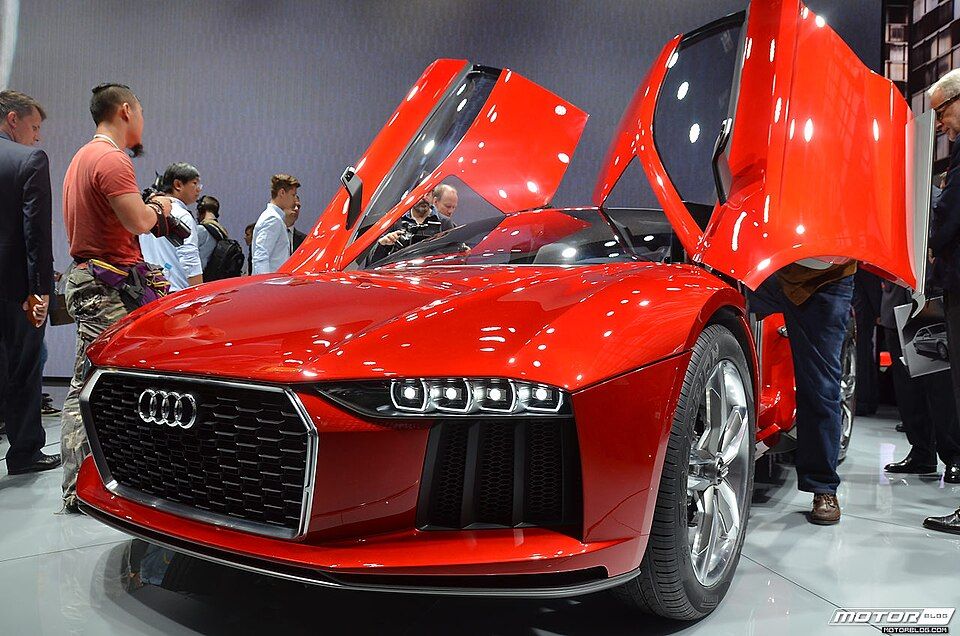
Photo: Audi Nanuk Quattro by MotorBlog from Ca, USA, CC BY 2.0, via Wikimedia Commons.
The Audi Nanuk quattro from 2013 is one of those cars that sounds wrong until you see it, then it still sounds wrong, but in a fun way. Audi and Italdesign created a two-seat machine with the basic stance of a supercar, then raised it, added big wheels and gave it the attitude of an off-road vehicle. The result looked ready to chase sports cars on a smooth road, then carry on after the tarmac ended. Under the rear bodywork sat a five-litre, ten-cylinder diesel engine. Yes, diesel. In a dramatic two-seat concept. Audi said it could reach 62 miles per hour from rest in 3.8 seconds and continue to about 189 miles per hour. Those figures were startling for a raised car weighing close to two tonnes, but the stranger part was how Audi tried to make the Nanuk useful away from smooth roads. The suspension could lower the body for faster road driving or lift it when extra ground clearance was needed.
The rear wheels could turn as well, helping the long car change direction at lower speeds and stay settled at higher ones. It was a mash-up before mash-ups became a normal sales pitch. Supercar. Diesel. Four-wheel drive. Adjustable height. Two seats. Little room for anything else. It’s the automotive version of wearing a dinner jacket with walking boots. You probably wouldn’t choose it for the school run through Stockport, and squeezing it into a tight multistorey car park would bring on a cold sweat. Yet on a clear road out near the hills, the idea starts to make a strange kind of sense. You’d get dramatic looks without having to panic at every rough surface or steep entrance. The Nanuk didn’t reach production, which isn’t surprising. It answered a question very few buyers had asked. But concept cars are allowed to do that. Sometimes the question is the interesting bit, and Audi’s question here was wonderfully simple: what happens if a supercar refuses to stay low?
Audi Skysphere, the roadster that changes its own length
Most cars have one length. That seems like a fair rule. The Audi Skysphere, revealed in 2021, looked at that rule and ignored it. This electric roadster could change the distance between its front and rear wheels by 250 millimetres, making the whole car shorter for a sportier drive or longer for a calmer, more spacious ride. Electric motors and sliding body parts handled the change. In the shorter setting, the driver took control from a normal-looking position. In the longer setting, the concept was meant to drive itself in certain situations, while the steering wheel and pedals moved out of sight to free extra cabin space. So it wasn’t just changing size for a party trick. Audi wanted the car to switch personality. One moment it was a low two-seat sports car for a quiet road.
The next, it was a long grand tourer where the occupants could sit back and let the car deal with the traffic. That could sound appealing on the M60 at half past five, though trusting a shape-shifting show car in rush hour might require a calm nature. The Skysphere was inspired by the long, elegant roadsters of the 1930s, especially the Horch 853, but it didn’t look old. Its huge front end, sharp lighting and low glass made it feel like a film prop. The idea also turned a familiar car-design problem on its head. Sports cars benefit from feeling compact and alert. Luxury cruisers benefit from extra length and room. Rather than picking one, Audi tried to build both into the same body. Would such a system be costly, heavy and difficult in a normal production car? Almost certainly. Does watching the body stretch make you grin anyway? Definitely. The Skysphere is weird because its strangest feature isn’t a fake vent or a wild seat. The basic skeleton changes while you’re sitting inside. That’s a much bigger swing.
Audi Activesphere, the sleek coupe that turns into a pickup
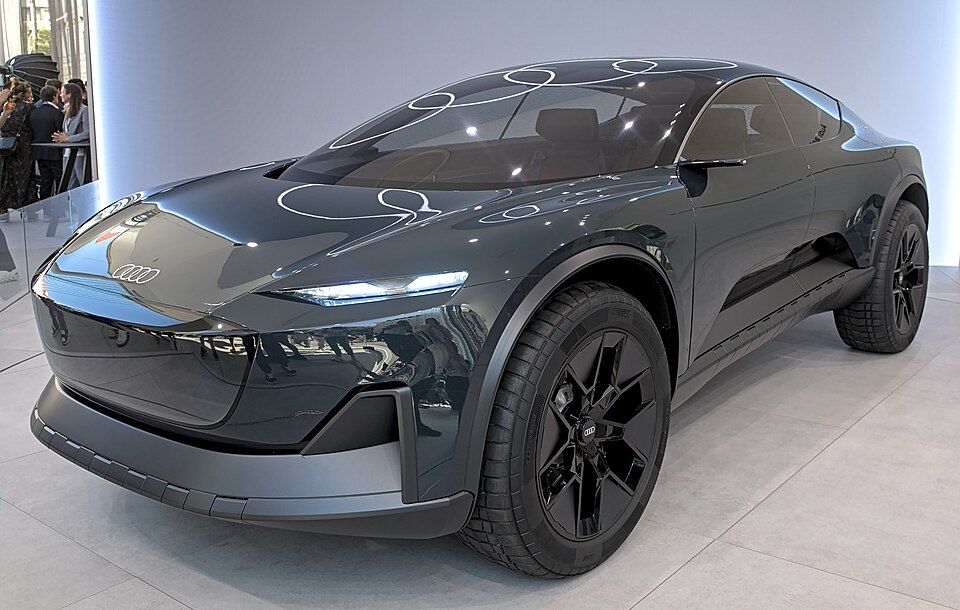
Photo: Audi Activesphere Concept by Alexander-93, CC BY-SA 4.0, via Wikimedia Commons.
The 2023 Audi Activesphere began as a tall, smooth four-door coupe with large wheels and enough ground clearance for rough tracks. That combination was unusual already. Then Audi added the trick that made people stop scrolling: the rear section could change into a small open load bed. Glass moved, panels folded and the back of the car opened up so it could carry bulky leisure gear, including two electric bikes. A sleek luxury car turning into a pickup sounds like something a child might sketch after being told to combine every favourite vehicle on one page. Yet Audi built the idea at full size. The doors opened away from the centre and there was no fixed pillar between them, creating a wide opening into the cabin. Inside, Audi imagined occupants wearing special glasses that placed controls and information into their view. The dashboard could stay clean because the digital buttons would appear only when needed.
That’s clever, but also a little strange. Lose your glasses and your futuristic car suddenly becomes a very expensive room with seats. The Activesphere also played with height, letting the body rise for rougher ground or sit lower on smoother roads. In that sense, it followed the same restless thinking as the Steppenwolf and Nanuk. Audi kept returning to one question: can a stylish road car cope with outdoor life without turning into a box? The Activesphere’s answer was to make the body itself change. Around Greater Manchester, the open rear could carry bikes out to a trail, though you’d want to check the rain forecast before leaving them uncovered. It’s easy to laugh at a car trying to be a coupe, off-roader, luxury cabin and pickup at once. But that’s why concepts exist. A normal production plan has budgets, safety rules, repair costs and owners who don’t want moving glasswork to misbehave on a cold Monday. A concept gets to say, “What if?” and build the answer before common sense arrives.
Why these strange Audis still matter
None of these cars needs to be your favourite for it to matter. The Avus showed a shiny aluminium future, even while hiding a pretend engine under its clear cover. The Rosemeyer turned racing history into a huge, brooding road-car shape. The Steppenwolf mixed a compact coupe with off-road ideas before that blend became common. The Urban Concept cut the city car down to two staggered seats and a sliding roof. The Nanuk raised a diesel supercar into the air. The Skysphere changed its own length. The Activesphere changed its job. Some ideas were realistic enough to influence later road cars. Others were there to stretch the imagination and give designers something to learn from. You can also see how Audi’s idea of “weird” changed with time. In the 1990s and early 2000s, the drama came from polished metal, giant engines and links to old racing cars. By the 2010s, the company was mixing vehicle types and thinking about smaller electric city machines. In the 2020s, the cars themselves began moving, hiding controls and changing shape around the people inside. That shift tells a bigger story about cars. Speed and engine size used to grab nearly all the attention. Now space, flexibility and the way people spend time inside a car can be just as important. Here at Dace Motor Company, the used Audis our customers see in Stockport and Manchester are built for real roads, real budgets and real British weather. That’s what most drivers need. Still, it’s hard not to enjoy the wild experiments sitting behind the sensible cars. They remind us that every familiar feature began as an idea, and some ideas looked ridiculous before they became normal. So the next time you see a clean, tidy Audi in traffic, remember the family history. Somewhere behind that calm face sits a polished spaceship, a tiny city pod, a diesel off-roader with supercar lines and a roadster that can stretch itself like it has just woken up. Strange? Very. Forgettable? Not a chance.