


How Modern Safety Features Changed Everyday Driving
A car used to help mainly after something went wrong. Seat belts held you in place, airbags softened the hit, and the body of the car took some of the force. Those things still matter hugely. But newer safety features have added another layer. Now the car may spot danger, warn you, steady itself, or brake before a small mistake turns into a serious crash. That change has made everyday driving feel different, even on an ordinary run from Stockport into Manchester.
At Dace Motor Company, we see cars from many years, brands, and price ranges, so the contrast is easy to notice. One used car may have a simple warning light in the mirror. Another may watch the lane markings, keep a set gap from traffic ahead, and warn the driver when tiredness seems likely. The names can sound confusing, but the basic ideas are easy once someone explains them without the brochure talk. This guide does that. We’ll look at what the main systems do, where they help, where they can be annoying, and why your eyes, hands, and judgement still matter most.
Safety moved from reacting to preventing
For years, most car safety work focused on what happened during a collision. Better seat belts, airbags, head restraints, stronger passenger areas, and crumple zones helped protect people once an impact had started. Modern cars still depend on those parts. Airbags, for example, work with seat belts rather than replacing them. The big change is that many cars can now react before contact, using cameras and other sensors to watch the road around them. The European New Car Assessment Programme, the organisation that crash-tests cars in Europe, groups many of these features around avoiding crashes, supporting the driver, and keeping the driver involved.
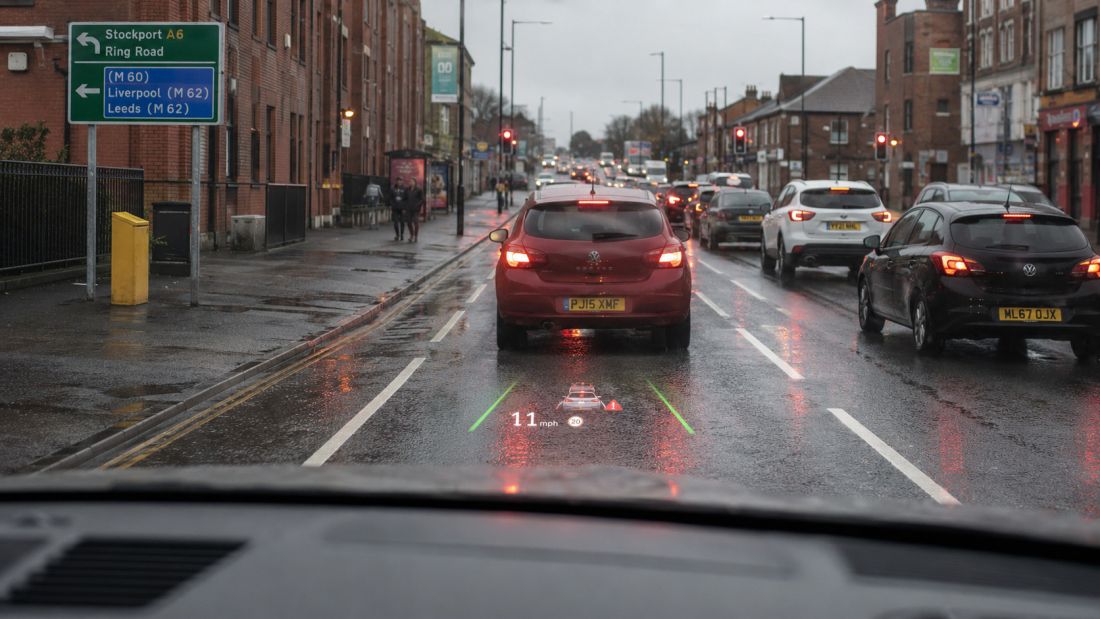
Think about a wet Tuesday near the Stockport Viaduct. Traffic bunches up, a van brakes harder than expected, and the driver behind takes half a second too long to react. An older car relies almost fully on the driver’s foot and steering. A newer car may sound a warning, prepare the brakes, or apply them if the driver hasn’t acted. That doesn’t mean the newer car is driving itself. It means the car has another chance to reduce the damage, or perhaps avoid the hit.
This change also affects normal, low-speed moments. Reversing out of a bay beside a large sport utility vehicle can leave you unable to see traffic coming from the side. A rear cross-traffic warning can spot movement and beep before the approaching car enters your view. A blind spot light can catch your eye just as a motorbike comes alongside on the M60. A tyre pressure warning can tell you that one tyre is losing air before the steering starts to feel odd. None of these moments feels dramatic. That’s the point. Good safety gear does much of its best work during the small lapses and awkward situations we all face.
Anti-lock brakes changed panic braking
Picture this. A football rolls into the road between parked cars, followed by a child. You hit the brake pedal hard. In an older car without an anti-lock braking system, the wheels could lock and slide. Once the front tyres are sliding rather than rolling, steering becomes much harder. You may turn the wheel but keep moving in almost the same direction. An anti-lock braking system senses that a wheel is about to lock, briefly releases some brake pressure, then applies it again. It does this very quickly, many times, so the tyres keep enough grip for you to steer while braking. South Gloucestershire Council’s road-safety guide makes an important point: the system helps you keep steering control during emergency braking, but it doesn’t promise a shorter stopping distance in every situation.
For the driver, the experience can feel strange. The brake pedal may pulse or push back. You may hear a rough buzzing sound. That can make someone lift their foot, especially if they’ve never felt it before. The right response in a real emergency is usually to keep firm pressure on the brake and steer where you need to go. Don’t pump the pedal. The car is already doing that job far faster than a person could.
This changed driving because braking and steering no longer had to be treated as separate choices during a panic stop. Drivers gained a better chance of slowing down while going around the danger. On a damp bend near Reddish, or on a busy road where a car suddenly turns across you, that can matter.
Still, grip has limits. An anti-lock braking system can’t create traction on ice, fix worn tyres, or cancel out driving too fast for the road. It can help you use the grip that’s there. That’s a useful distinction. The feature is a helper, not a free pass.
Stability control catches the start of a skid
Anti-lock brakes help during hard braking. Electronic stability control looks after a different problem: the car starting to go where you didn’t mean it to go. That might happen if you enter a bend too quickly, make a sudden move around debris, or hit a slippery patch. Sensors compare the direction you’re steering with the direction the car is actually moving. If those two things don’t match, the system can brake individual wheels and reduce engine drive to help bring the car back in line. A United Kingdom government review described the system as applying braking at separate wheels to support more stable cornering, while Transport for London research explains that it can correct the car’s path and help prevent a loss of control.
You may never notice it working. A light might flicker on the dashboard for a moment, or the car may feel as though it has gently tucked itself back into place. That quiet action is part of what changed everyday driving. In the past, a quick swerve could begin a slide that depended fully on driver skill and luck. Now the car may step in during the first fraction of that slide.
Traction control is a close relative. It deals with wheelspin during acceleration. Say you pull away from a damp side road and one driven wheel starts spinning. The system may cut some engine drive or brake the spinning wheel, helping the tyre regain grip. It’s useful on wet hills, muddy parking areas, and frosty mornings.
But physics still gets the last word. Stability control can help correct a developing skid; it can’t make a tight corner safe at any speed. Nor can it turn summer tyres into winter tyres or replace a sensible gap. Drivers sometimes feel safer because a warning light rarely appears, yet that may simply mean the car has been working quietly. Treat the feature as a safety net. You still need to avoid jumping off the platform.
Automatic emergency braking added a second reaction
Human reaction time isn’t fixed. It changes with tiredness, distraction, glare, stress, and plain surprise. You can be watching the road and still take a moment to work out that the car ahead has stopped rather than merely slowed. Automatic emergency braking tries to cover part of that delay. Cameras and sensors look ahead for a likely collision. The car may first warn you. If you don’t respond soon enough, it can apply the brakes to avoid the crash or reduce the impact. The European New Car Assessment Programme says the feature can act when danger is detected even if the driver doesn’t have time, while Thatcham Research describes crash avoidance as a major direction in modern vehicle safety.
This matters in city traffic, where hazards appear from every angle. Imagine crawling along Deansgate, glancing at a mirror before changing position, then looking forward to find the queue has stopped. Or picture a cyclist moving across the front of the car at a junction. Some newer systems can look for cars, pedestrians, and cyclists, though the exact ability varies by model, age, speed, weather, and equipment. Never assume every car can spot every hazard.
The name can also give the wrong impression. “Automatic” sounds complete and certain. It isn’t. The system may brake late because its main goal is to reduce harm when a crash looks likely, not to provide smooth everyday stopping. It may fail to recognise an unusual object. Heavy rain, fog, dirt, damage, low sun, or covered sensors can affect what the car sees. And a feature fitted to one trim level may be missing from another car that looks almost identical.
Even with those limits, the idea is a big one. The car can add a second reaction after yours, or just before yours. In a close call, a small drop in speed before impact can be very important. Better still, the car may stop in time and leave everyone with nothing worse than a racing heart and a story to tell later.
Lane warnings, lane steering, and the problem of faded white lines
Lane departure warning and lane-keeping support sound similar, but they don’t do quite the same job. A lane departure warning alerts you if the car drifts across a lane marking without an indicator. The warning might be a beep, a dashboard message, or a vibration through the steering wheel. Lane-keeping support goes a step further. It can make a small steering correction or use braking to guide the car back. Guidance from a major motoring organisation draws the same line between a system that warns and one that steps in.
On a long motorway run, that help can catch the kind of slow drift caused by tiredness or a brief loss of focus. It can also be useful on a dark dual carriageway, where the lane edge is harder to judge. Some cars combine lane centring with adaptive cruise control, helping with both road position and the gap to the vehicle ahead. The European New Car Assessment Programme tests these combined systems, but it also checks whether they keep the driver involved rather than encouraging overconfidence.
Now for the real-life bit. Lane systems can be fussy. Roadworks, temporary yellow lines, faded paint, standing water, narrow lanes, and roads with no clear edge can confuse them. Around Greater Manchester, you’ll also find patched surfaces and lane markings that seem to have had a disagreement halfway down the road. A system may tug the wheel when you’re safely giving a cyclist room, or complain while you’re passing parked cars. That can feel irritating.
Don’t switch it off forever just because it bothered you once. Learn how your car’s system behaves and how to adjust it. Use indicators before changing lane, since many systems treat that as a sign that the movement is planned. Keep the camera area near the top of the windscreen clean. And stay ready to steer. The car sees painted lines and moving shapes. You see the full situation, including the road worker waving traffic through, the cyclist avoiding a drain cover, and the delivery van half on the pavement.
Blind spot warnings made mirror checks stronger, not optional
Every car has areas that mirrors don’t show well. A quick shoulder check helps, but even careful drivers can miss a small vehicle sitting just behind the rear door. Blind spot warning uses sensors to watch those areas. A light usually appears in the door mirror when another road user is beside you. If you signal while the space is occupied, the car may flash the light or sound a warning. Motoring guidance explains that these systems can use cameras or sensors near the rear of the car, and that they’re useful but not foolproof.
That last part matters. A warning light isn’t permission to move when it goes out. A fast motorbike may enter the gap between your first mirror check and the start of your lane change. A bicycle may be too close to the side of the car for the system to read in the way you expect. Dirt, ice, or a damaged bumper can also affect sensors.
Rear cross-traffic warning uses a similar idea while you’re reversing. It watches for vehicles approaching from the left or right, which is handy when a van or large sport utility vehicle blocks your view. Some cars add braking if you don’t respond. This has changed parking because the car can now look sideways before the driver has a clear view.
We’ve all been there: you reverse two inches, stop, lean forward, look again, and hope the person flying down the car park has seen your lights. A cross-traffic warning gives you another clue. Still, go slowly. Keep looking. Check both sides. Watch for people walking behind the car, especially children, who can be below the view through the rear window. Sensors help fill gaps; they don’t remove the need for a careful routine.
Adaptive cruise control made busy roads less tiring
Old-style cruise control holds a chosen speed until the driver brakes or switches it off. Adaptive cruise control also watches the vehicle ahead and changes speed to keep a set gap. If traffic slows, your car slows. When the lane clears, it returns to the chosen speed, within the limit you set. The European New Car Assessment Programme describes it as a system that keeps a steady speed and a safe distance by matching traffic flow.
On a clear motorway, that can reduce the constant ankle work of easing on and off the accelerator. In stop-start traffic, some systems can slow almost to a halt and move again. That makes a long crawl on the M60 feel less draining. It can also encourage a steadier gap, which is useful because people have a habit of creeping closer to the car ahead without noticing.
But the system’s idea of a safe gap may not suit every condition. In heavy rain, spray, fog, or darkness, you may want far more room. A vehicle can also move into your lane suddenly, leaving the system little time to react. Older versions may struggle with stationary traffic if they were following a moving vehicle moments before. Read the handbook and learn the limits of the exact car, rather than assuming every version works the same way.
Speed sign recognition adds another kind of support. A camera reads signs and shows the limit on the dashboard. Some cars can warn you if you go over it, while others can link the shown limit to cruise control. Handy, yes. Perfect, no. A camera may read a sign on a side road, miss a covered sign, or keep an old limit after a junction. You’re still responsible for knowing the legal limit and adjusting for the road. The Highway Code is direct on this: driver assistance must not reduce concentration, and the driver remains responsible for the vehicle.
Tiredness alerts, tyre warnings, and the quieter safety features
Some safety features don’t steer or brake. They watch for clues. Driver attention systems may study steering movements, time behind the wheel, lane position, or the driver’s face, depending on the car. If the pattern looks like tiredness or distraction, the car may show a coffee-cup symbol and suggest a break. The European New Car Assessment Programme describes attention support as a feature that watches driving behaviour for signs of fatigue.
The warning can feel a bit cheeky if you’re wide awake. Maybe you moved around a pothole and the car decided you need a brew. But tiredness is hard to judge from inside your own head. We tell ourselves we’re fine because home is “only twenty minutes away.” Then the eyelids get heavy, concentration slips, and the last few miles become the risky part. A warning isn’t a diagnosis. It’s a prompt to ask an honest question: am I still sharp enough to drive?
Tyre pressure monitoring is even less dramatic. It warns when a tyre’s pressure falls below the expected level. Low pressure can affect steering, braking, tyre wear, and fuel use. The warning gives you a chance to stop and check before the tyre becomes badly damaged. Don’t just reset the light and carry on. Check all four tyres with a gauge when they’re cool, use the pressures listed by the car maker, and inspect for a nail, split, or bulge.
Automatic full-beam control is another quiet helper. It dips the headlights when it sees traffic, then raises them again on a dark road. Parking sensors and cameras reduce guesswork around walls, posts, and low objects. Emergency call systems can contact help after a severe crash. Each feature deals with a small part of driving, yet together they change how supported the driver feels. Less guessing. Earlier warnings. A few extra chances to catch a mistake.
Why cameras and sensors need proper care
Modern safety features depend on being able to see and measure correctly. A camera may sit behind the windscreen. Sensors may be hidden in the grille, badge, bumper, or mirror. If one of those parts is moved during a repair, the system may need calibration. That means checking and adjusting it so the car knows exactly where straight ahead is and how far objects are from its path. Thatcham Research says calibration after relevant repairs should be completed to the vehicle maker’s stated limits, with proof that the affected systems work correctly.
This matters after a windscreen replacement, front bumper repair, suspension work, wheel alignment, or collision damage, depending on the car. A camera that points slightly off-centre may still show no obvious fault to the driver, yet its view of the lane could be wrong. So ask the repairer whether the car has safety sensors, whether calibration is needed, and whether it was completed.
Basic cleaning matters too. Wipe dirt, snow, and heavy road film from camera and sensor areas, using the handbook to find them. Don’t cover a sensor with a sticker, number-plate frame, or accessory. Pay attention to dashboard messages such as “camera blocked” or “system unavailable.” Those alerts are telling you that the helper may be asleep.
And remember that replacement parts can affect things. A windscreen must be the correct type for the fitted camera. Bumper repairs must account for sensors behind the surface. This isn’t a reason to fear modern cars. It’s just a new part of looking after one, much like checking tyres, brakes, and lights. The safety feature is valuable only while it can read the road as intended.
What to check when buying a used car with modern safety kit
Used-car adverts can make safety equipment sound simple, but names vary between brands, model years, and trim levels. Two cars with the same badge and engine may have different cameras, sensor packs, or software. One may give a lane warning; another may steer gently. One may brake for cars at town speeds; another may also react to pedestrians or cyclists. Don’t rely on a model name alone.
Start by checking the exact specification of the individual car. Look for the camera near the top of the windscreen, warning lights in the mirrors, sensor panels in the bumper, and controls on the steering wheel. During a test drive, ask for a calm explanation of the settings. You don’t need to stage a dangerous test. See whether the dashboard shows the systems starting normally and whether any fault messages stay on. Try the parking camera and sensors in a safe space. Check that cruise control buttons respond. Notice whether lane support can be adjusted rather than simply accepted or rejected.
Ask about repairs to the windscreen, bumper, steering, suspension, and wheel alignment. If work could have disturbed a camera or sensor, check whether calibration was carried out. Look through the service history and invoices. A well-kept file can answer questions that a shiny dashboard can’t.
At Dace Motor Company, we think the useful question isn’t “Does this car have loads of technology?” It’s “Which features does this exact car have, how do they work, and are they right for my driving?” Someone who spends most days around Stockport may value parking cameras, blind spot warnings, and automatic braking in busy traffic. A regular motorway driver may care more about adaptive cruise control, lane support, and tiredness alerts. The best safety feature is one you understand, trust, and use correctly.
The driver is still the main safety system
Modern safety features have changed driving because they can watch areas we miss, react during a delay, and help keep the car stable when grip starts to disappear. They’ve made parking easier, motorway driving calmer, and emergency moments less dependent on one perfect human reaction. That’s real progress.
But no sensor knows the whole story. It doesn’t know that the child on the pavement is about to run after a dog. It may not read the hand signal from a cyclist. It can’t decide that heavy rain calls for a much bigger gap unless the driver makes that choice. The Highway Code says not to rely on lane warnings, motorway assistance, or parking systems, and says drivers must stay in control. The European New Car Assessment Programme takes a similar view, testing whether assisted driving keeps the person behind the wheel engaged.
So use the help. Let the blind spot light prompt a second check. Let the tiredness warning persuade you to stop for a coffee. Let automatic braking back you up if a queue stops suddenly. But keep scanning, keep space around the car, slow down for poor weather, and learn what the dashboard symbols mean before you need them.
That’s how modern safety works best: the car catches some mistakes, and the driver avoids creating the rest. On a busy Manchester commute, a wet school run, or a late trip home through Stockport, that partnership can turn a close call into a quiet non-event. And, to be honest, the best road-safety story is the one where nothing happened.