


How Jaguar’s SV Division Built Some of the Wildest Modern Jaguars
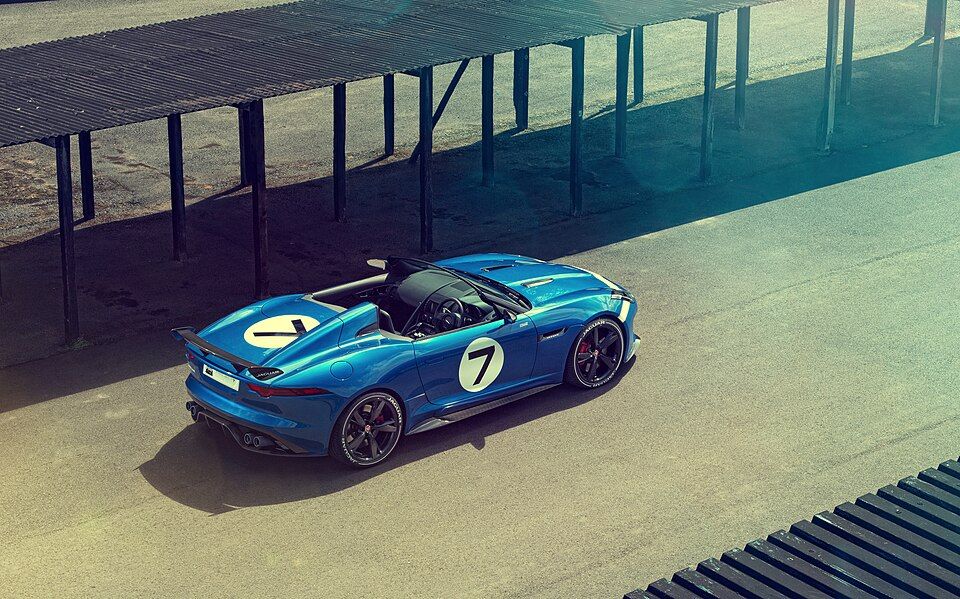
Photo: Jaguar - Project 7 by Jaguar MENA, CC BY 2.0, via Wikimedia Commons.
Jaguar has always had a slightly mischievous side. Even its most elegant cars can feel as though they’re hiding something under the bonnet, like a well-dressed guest who might leave the party sideways. Special Vehicle Operations gave that side of Jaguar a proper home. The division was set up to create cars that sat above the normal range, including low-volume collector models, heavily reworked performance cars and one-off personal commissions. In 2016, it opened a £20 million technical centre near Coventry, with its own engineering, assembly, paint and customer areas spread across 20,000 square metres. That mattered because these cars weren’t simple trim packages. The team could change engines, suspension, bodywork, cooling, brakes, steering and even the way air moved around the car, then build some models by hand in very small numbers. Think of it like giving a skilled chef a normal family recipe, a private kitchen and permission to make it far spicier. The basic flavour stays familiar, but the result can be a shock. For drivers around Manchester and Stockport, that mix makes sense. A car still has to cope with wet mornings, slow traffic on the A6 and rough patches that can make a stiff sports car feel like a shopping trolley rolling down steps. Yet, when the road clears near the Peak District, you want the steering, engine and brakes to wake up. At Dace Motor Company, we see that same balance in what local used-car buyers ask for: something special, but something they can still live with. Jaguar’s special division kept returning to that idea. It didn’t build machines that were quick for one perfect lap and miserable everywhere else. Well, Project 8 came pretty close to that line. But even the wild cars kept number plates, lights, heaters and enough road manners to get home after the fun.
Project 7 was the loud first warning
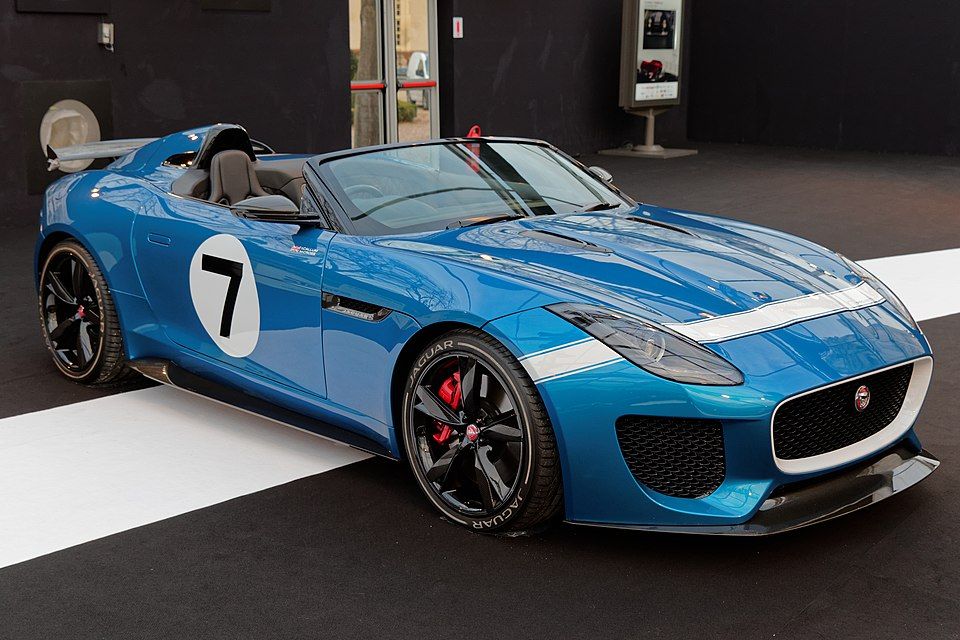
Photo: Jaguar F-Type Project 7 by Thesupermat, CC BY-SA 4.0, via Wikimedia Commons.
The first big sign of what this team could do was the Jaguar F-Type Project 7. It began as a concept, then Jaguar decided to build up to 250 road-legal examples. That alone made it unusual. Car makers show dramatic concepts all the time, then the production version arrives with softer edges, smaller wheels and most of the theatre removed. Project 7 kept the theatre. Its shape took ideas from the famous Jaguar D-Type racing car, especially the raised section behind the driver’s head. Its name referred to Jaguar’s seven overall wins at the 24 Hours of Le Mans. Under the long bonnet sat a supercharged 5.0-litre eight-cylinder engine producing 575 metric horsepower and 680 newton metres of pulling force. Jaguar claimed 0 to 60 miles per hour in 3.8 seconds and limited the top speed to 186 miles per hour. Those numbers were huge in 2014, but the character mattered just as much.
Project 7 sent its engine force to the rear wheels, weighed 1,585 kilograms and used carbon-ceramic brakes as standard. In everyday language, those brakes use a special material that copes with repeated hard stops without fading as quickly as regular steel discs. The car also had a removable roof, two seats and some luggage space, so it wasn’t a pure racing machine wearing road number plates. Still, let’s face it, this wasn’t made for an easy Sunday run to the Trafford Centre. The low screen, huge rear wing, sharp body add-ons and roaring exhaust made every trip feel like an event. Project 7 laid down the rulebook for later Special Vehicle Operations Jaguars: start with a recognisable model, keep its basic personality, then turn every dial until the engineers start grinning and the accountants start looking nervous.
The F-Type SVR made 200 miles per hour feel almost sensible
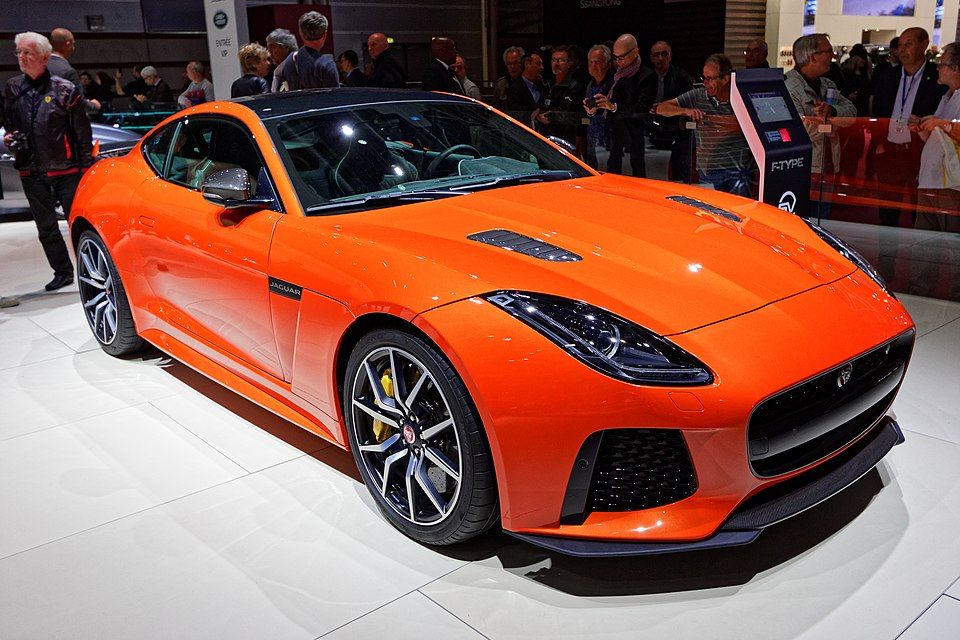
Photo: The F-Type SVR by Thesupermat, CC BY-SA 4.0, via Wikimedia Commons.
Project 7 was rare and dramatic, but the F-Type SVR had a different job. It had to become the fastest regular-production Jaguar road car of its day without losing the qualities that made the normal F-Type such an appealing sports car. Jaguar gave it the same broad engine recipe, a supercharged 5.0-litre eight-cylinder unit with 575 metric horsepower, but paired it with all-wheel drive and an eight-speed automatic gearbox. The coupé could reach 200 miles per hour, while Jaguar quoted 0 to 60 miles per hour in 3.5 seconds. Numbers like that sound unreal until you picture the distance disappearing. At motorway speed, the car could add pace with the sort of ease most family cars show when moving away from a set of lights. Yet the clever part wasn’t simply making the engine stronger.
The special division cut weight, changed the suspension, retuned the gearbox and all-wheel-drive system, and reshaped parts of the body to improve cooling and stability. Buyers could also choose carbon-ceramic brakes, while a lighter titanium exhaust helped create the hard, crackling sound that became a major part of the car’s appeal. You know how it is, some cars look fast while parked but feel oddly quiet once you start driving. The F-Type SVR did the reverse. It looked sleek rather than silly, then made its intentions very clear the moment the engine fired. For a local driver, that all-wheel-drive layout also had an obvious benefit. Greater Manchester rain doesn’t book an appointment. It just turns up. Sending drive to all four wheels gave the SVR extra grip when the road was cold or damp, though no system can cancel out poor tyres or a heavy right foot. That mix of huge speed, dramatic sound and real road usefulness is why the F-Type SVR may be the division’s best all-round creation.
Project 8 took a normal saloon and completely lost its manners
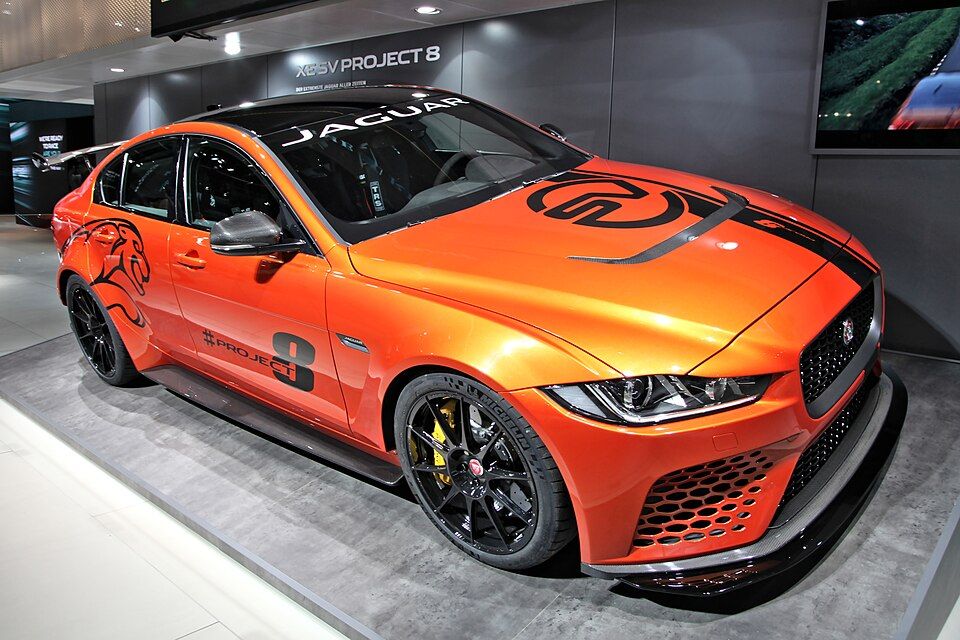
Photo: Jaguar XE SV Project 8 by Alexander Migl, CC BY-SA 4.0, via Wikimedia Commons.
Then came Project 8, the car that made the F-Type SVR seem restrained. Jaguar began with the XE, a compact four-door saloon built to compete with familiar German executive cars. The special division kept the basic cabin shape and some of the doors, but changed so much else that calling it a faster XE feels like calling a thunderstorm “a bit of weather.” The finished car used a supercharged 5.0-litre eight-cylinder engine with 600 metric horsepower, all-wheel drive and an eight-speed automatic gearbox. Jaguar claimed 0 to 60 miles per hour in 3.3 seconds and a top speed of 200 miles per hour. Production was capped at 300 cars, each assembled by hand at the special technical centre. The price started at £149,995 in the United Kingdom, which put it far beyond a regular sports saloon.
That price paid for far more than a large engine. Project 8 had wider bodywork, major cooling changes, adjustable suspension, huge brakes and a flat floor with air-guiding parts underneath. It also wore a towering rear wing and a deep front splitter. Those pieces weren’t there for a showroom pose. They pushed the car into the road at speed, helping the tyres keep their grip through fast corners. Buyers could choose a four-seat version or a Track Pack with two seats and a roll cage. Oddly, it was built in left-hand drive only, even for British buyers. That choice showed where Jaguar’s priorities sat. This wasn’t a relaxed saloon with a sporty badge. It was a track-focused machine that happened to have four doors. On a run through Stockport traffic, the wing probably looked faintly ridiculous. On a fast circuit, it made perfect sense.
The lap records proved the wild bodywork wasn’t for show
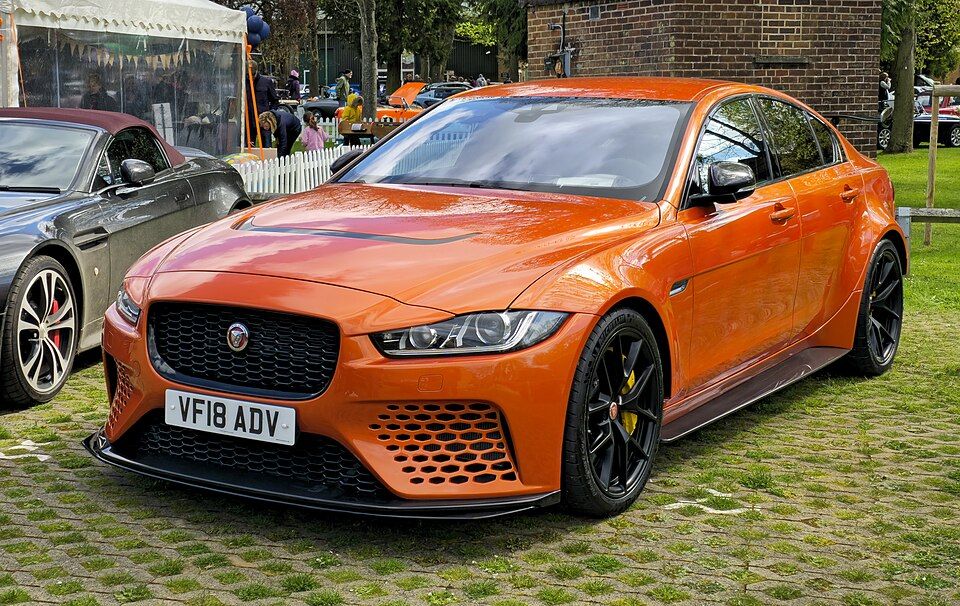
Photo: 2018 Jaguar XE SV Project 8 by Calreyn88, CC BY-SA 4.0, via Wikimedia Commons.
A car like Project 8 needs proof. Big claims, vents and wings are easy to print in a brochure, but a stopwatch is less polite. In November 2017, a near-production Project 8 covered the 12.8-mile Nürburgring Nordschleife in 7 minutes 21.23 seconds, setting a record for a four-door production car at the time. Jaguar went back in 2019 and made the car faster still. Development driver Vincent Radermecker completed the same 20.6-kilometre layout in 7 minutes 18.361 seconds, cutting 2.9 seconds from the earlier mark. The run used road-legal Michelin Pilot Sport Cup 2 R tyres that buyers could purchase, rather than secret racing tyres made for one attempt. Why does that matter? The Nürburgring is long, bumpy and packed with corners that punish weak brakes, poor cooling and clumsy suspension.
A car can feel brilliant for two minutes on a smooth road and fall apart when heat builds or the surface gets rough. Project 8 had to keep working for over seven minutes at a pace few road cars could match. Still, lap records can make car talk feel detached from real life. Nobody should treat the Snake Pass like a timed event, and a rear wing won’t make public roads safe for racing. The useful lesson is simpler. Jaguar’s engineers didn’t add parts for decoration. They tested the complete package under extreme strain, then altered tyres, suspension and airflow until the numbers backed up the claims. Project 8 was wild because every area of the car was pushed in the same direction. Engine, brakes, steering, body and cooling all had one job: help a four-door Jaguar behave like a serious track car. The stopwatch showed that the strange idea worked.
The F-Pace SVR brought the same attitude to a family-sized Jaguar
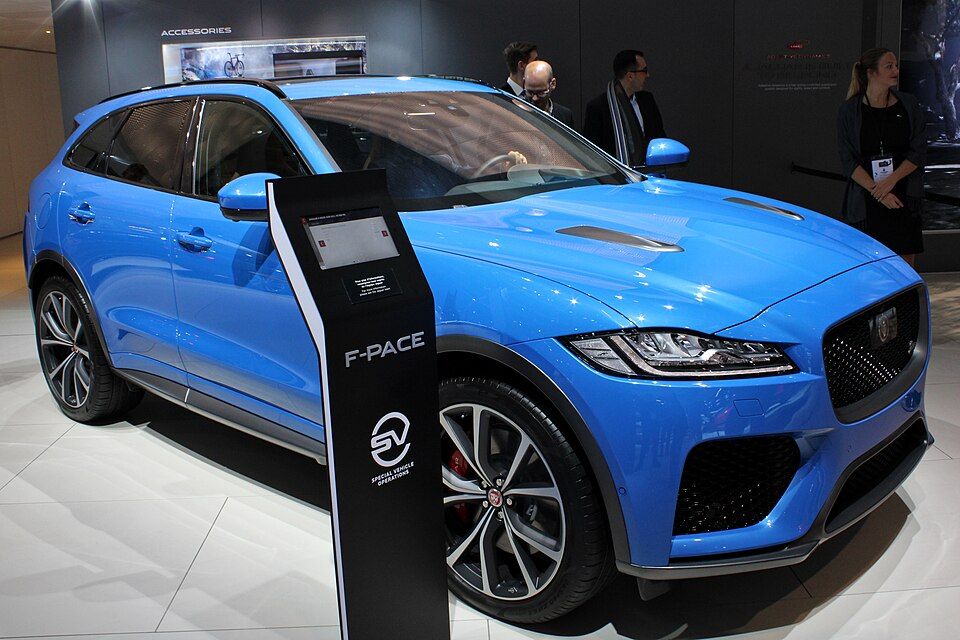
Photo: Jaguar F-Pace SVR by Alexander Migl, CC BY-SA 4.0, via Wikimedia Commons.
The F-Pace SVR showed that Special Vehicle Operations could create drama without using a low sports-car body. The regular F-Pace was a practical five-seat Jaguar with a large boot and a higher driving position. The SVR version arrived with a supercharged 5.0-litre eight-cylinder engine producing 550 metric horsepower and 680 newton metres. Jaguar quoted 0 to 60 miles per hour in 4.1 seconds and a top speed of 176 miles per hour for the first version. Engineers fitted stiffer springs, revised dampers, larger air openings and unique front and rear bodywork. The exhaust used four outlets, so it looked and sounded far removed from the calmer models in the range. Later updates raised pulling force to 700 newton metres and cut the 0 to 60 miles per hour time to 3.8 seconds. That’s the funny part of the F-Pace SVR. It can carry adults, school bags and a week’s shopping, yet it accelerates like a serious sports car. We’ve all been there, stuck behind a delivery van in drizzle, wondering why anyone needs a fast family car. Then a clear road appears, the engine responds instantly and the answer becomes easier to feel. The F-Pace SVR also gave Jaguar’s special division a broader audience. Project 7 and Project 8 asked owners to accept real compromises. The F-Pace asked for fewer. Its size suited daily life around Manchester, where broken surfaces, narrow side streets and packed car parks can make a low, firm car tiring. Of course, the trade-offs didn’t vanish. Fuel use, tyre costs and brake bills could be high, and the car’s width still needed care. Yet it proved the division’s recipe could work in a practical shape without turning the result into a watered-down badge exercise.
Bespoke editions turned engineering into storytelling
As the division grew, it also became a place for highly personal finishes and small production runs. The F-Pace SVR Edition 1988 is a good example. Jaguar limited it to 394 cars, matching the number of laps completed by the winning Jaguar XJR-9 at the 1988 24 Hours of Le Mans. It came in a deep Midnight Amethyst paint that could look almost black before purple tones appeared in bright light, with satin gold wheels and matching details. Jaguar said its designers tested over 40 paint variations before choosing the final shade. Underneath, it kept the 550 metric horsepower F-Pace SVR mechanical package, so the special colour story sat on top of a genuinely fast car. The final F-Type ZP Edition followed a similar path.
Jaguar announced 150 examples for the last year of F-Type production in 2024, each using the 575 metric horsepower supercharged eight-cylinder engine. The colours and hand-painted door circles referred back to early racing E-Types known by the project code ZP. This side of the special division was less about chasing another lap record and more about giving an existing car a clear link to Jaguar history. That can go wrong when a maker adds a badge, chooses a paint colour and asks for a huge extra sum. Jaguar’s stronger special editions worked because the base cars already had serious engineering and the historical details were specific. They pointed to real races, real cars and real numbers. To be honest, buyers may still choose one because the colour looks great under petrol-station lights. That’s fine. Cars are emotional objects. The clever bit is making the story deep enough that the details still feel interesting years later, after the first-owner excitement has worn off.
What to check before buying one used
A wild Jaguar can be a brilliant used buy, but it rewards a calm inspection. Start with the service record. These engines, gearboxes, cooling systems and adjustable suspension parts work hard, so missed maintenance matters. Check that scheduled servicing was completed on time and ask for invoices, not just stamps. Look closely at tyres. They should match across each axle, have even wear and come from a suitable premium range. Uneven inner-edge wear can point to alignment trouble, worn suspension parts or a car that has spent time on track. Brakes need the same attention. Carbon-ceramic discs can last well in normal use, yet replacement costs can be eye-watering, so inspect them for damage and get a specialist opinion. On a test drive, listen for knocks over rough roads, feel for vibration under braking and make sure the gearbox changes cleanly when cold and warm. Test every electric item, including cameras, seat controls, climate control, the moving rear spoiler on an F-Type and any adjustable driving settings. Check the body at low level, since front splitters and side skirts meet kerbs long before the driver notices. For Project 8, proof of correct parts and careful upkeep is especially important because so many pieces are unique. A history check also helps reveal finance, theft records, mileage questions or past insurance write-offs. Dace Motor Company says every vehicle it offers is checked through a vehicle-history service before sale, which is the sort of basic protection any buyer should look for, whichever dealer or private seller they choose. And don’t rush because the exhaust sounds good. It will sound just as good after a proper inspection, and you’ll enjoy it far more when you know the car’s condition matches its noise.
Why these cars still feel special on roads around Manchester and Stockport
The best Special Vehicle Operations Jaguars weren’t created by adding a loud exhaust and a new badge to an ordinary car. They were complete reworks with a clear idea behind them. Project 7 mixed F-Type speed with the look of a 1950s Jaguar racer. The F-Type SVR chased 200 miles per hour while staying usable in rain and traffic. Project 8 turned a compact saloon into a hand-built track machine, then proved the idea with record laps. The F-Pace SVR put much of that attitude into a car with five seats and a useful boot. Later bespoke editions gave those mechanical changes a stronger link to Jaguar’s racing past. Each one was wild in a different way. That variety is the real achievement. Around Manchester and Stockport, you probably won’t use the top speed, and you certainly shouldn’t try. What you can enjoy is the response at normal speeds, the weight of the steering, the sound bouncing off a tunnel wall and the sense that the car has been made by people who cared about the odd little details. A quick run past the Etihad or down the Mancunian Way can still feel special without breaking any rules. Then you can crawl through roadworks, park up and use the car again the next morning. That split personality is very Jaguar. These cars can be elegant, a bit theatrical and slightly unreasonable, all at once. And maybe that’s why enthusiasts remember them. Plenty of fast cars deliver impressive figures. Far fewer have a clear voice. Special Vehicle Operations gave modern Jaguars a louder one, sometimes literally, and the best results still feel like they were built because a group of engineers asked a simple question: “How far can we take this before it stops being a Jaguar?” Somehow, even Project 8 still had the answer written all over it.