


Why Porsche Nearly Went Bankrupt in the 1990s
Back in the late 1980s and early 1990s, Porsche was not having an easy time. Sales were dropping. Their lineup was starting to look a little old. The cost of making each car was too high. For example: by 1993, Porsche’s U.S. sales had fallen drastically - one source says they sold only about 3,700 cars in the U.S. that year. They had big, expensive cars (like the 928, 944, 968) but the market was shifting. People in the UK (hello Manchester/Stockport folks) were seeing more affordable cars that still looked sporty and fun. Porsche’s pricing, and the way they made cars, just didn’t fit as well as it used to. Their manufacturing process was slow. One article says it took Porsche as long as 120 hours to build one car at that time. That’s just too long when you’re trying to stay competitive. Also, the cost of making bespoke parts, low volumes, and high standards for what a Porsche “should be” all meant margins were tight. So you had a premium brand, heritage and all that, but the business side wasn’t healthy.
The signs things were really bad
If you live in Stockport and you know your motors, you’ll know that when a brand can’t sell enough units, even if it has a strong name, it’s in trouble.
For Porsche:
- Their sporty-coupe and front-engine models were not selling enough. The 968, for instance, only made a small number of cars and was stopped after a few years.
- The global economy had its lumps (recession in the early 1990s, currency things, changing tastes). That hit niche luxe brands even harder.
- Porsche had to bring in outside help: Articles mention that they brought in engineers and specialists from places like Toyota to help improve processes.
- In short: heritage alone wasn’t enough to keep Porsche ticking over. They almost went under.
How things turned around (and why it mattered)
So how did the tide turn? Two big things happened: first the process improvement, then the product change.
- Process improvement: Porsche made manufacturing much more efficient. One source says build times were reduced, waste cut, etc.
- Product change: They launched a car that changed their sales volume: the Porsche Boxster (internally known as the 986). It hit the market mid-90s (1996-release) and became the brand’s top-selling model for some time.
Why did the Boxster matter?
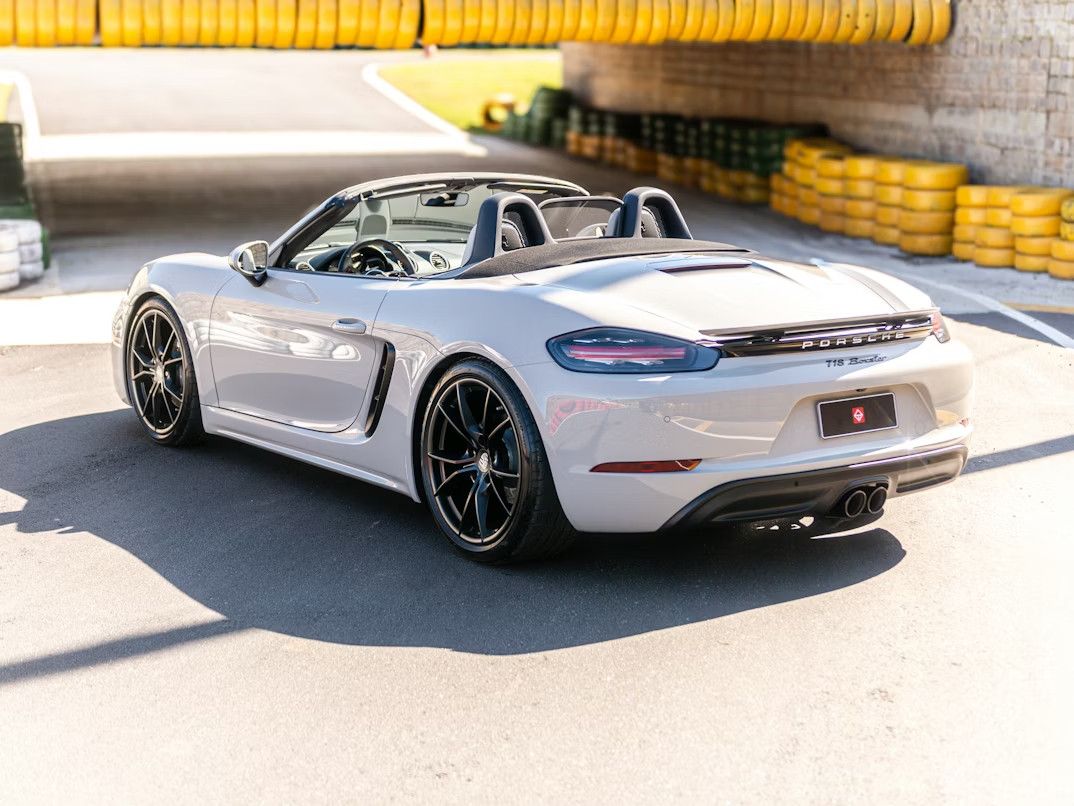 A few reasons:
- It was more affordable (relatively) than the 911. That opened Porsche to a wider audience.
- It had that mid-engine layout, two seats, open top – fun car. That appealed even in tough times when people still wanted a little excitement.
- Its success meant showing the world: Porsche still had something compelling, and could sell in volume, not just the one model for the wealthy few.
The Boxster and the saving of Porsche
Let’s bring it closer to home (Stockport-Manchester style): imagine you’re buying a car in Manchester, you want a sporty occasional car, but you also want used-car value, etc. That’s similar to what many folks felt: you like the idea of a Porsche, but the price and risk felt high. Porsche made the Boxster to tap that feeling. By selling many Boxsters, Porsche got volume, which helped pay for their other models (the 911, etc). One article states that between about 1996 and 2003 the Boxster was their best-selling model. Because of that boost, Porsche could invest, improve, survive. They went from near-bankrupt to profitable. One source says they turned a big corner in 5-6 years.
What the story means for car buyers
You might think: “Okay fine, but what’s this got to do with me, or with used cars, or with us at Dace Motor Company?”
Here’s the takeaway:
- Big brands can struggle. A strong name isn’t guaranteed. So when you buy a used car, especially a premium brand, you should look at how sustainable the brand/model is. Porsche’s story shows how a model could rescue a brand.
- Used car value: Models that saved brands often become interesting used cars. Because the brand needed them to succeed, they tend to have high build volume, and parts/support are better. For example, Boxsters are still fairly accessible (though you need to check condition).
- Diversification: The lesson for buyers is that niche exclusivity is cool, but if you want reliability, parts availability, etc, you might want to pick a model that had real commercial backing (i.e., lots made, good parts).
- For used-car dealers (yes, like us at Dace Motor Company) the model is important. We check history, production numbers, brand health. If a brand was on shaky ground, there might be risk of parts servicing, support, fewer examples, etc. With Porsche, because the Boxster succeeded, parts/support for that era are better than they might have been.
The Stockport/Manchester angle
Since we’re based in Stockport/Greater Manchester, you might spot a local nuance: around here, folks like the idea of quality, performance, and dealing with local trusted dealers. A brand like Porsche might feel a bit distant, but the Boxster made that entry level feel more possible. If I was walking up Buxton Road or Greg Street and saw a Boxster on the lot, I’d say to myself: “Yeah, that’s serious, but maybe less scary than a 911 Turbo”. That shift is what Porsche banked on. In Manchester-area traffic, in day-to-day use, a car that gives you fun but isn’t completely wild is smart. The Boxster straddled that line. And for you as a buyer: when a model saves a brand, that brand tends to take care of that model (more support, more attention). That’s reassuring.
Some concrete facts
- The Boxster (type 986) was introduced in about 1996 and became Porsche’s highest volume model until the SUV era.
- Porsche’s sales in the early 1990s were dropping dangerously low; one source says U.S. sales dropped to ~3,700 in 1993.
- Porsche adopted more efficient production methods, using ideas from Japanese firms, to cut hours per car and reduce waste.
Why this story still matters
Even though Porsche is now doing well (and you’ll see plenty of Porsches around Manchester, Stockport and beyond), the early-90s crisis is a reminder: every car maker can hit a rough patch. For anyone buying or selling used cars - like at Dace Motor Company - that history matters. It helps when you can say: “Yep, this brand made it through, this model played a part.” Because that means the model has continuity. Also: when you’re looking at a used car (any brand), you might ask: was the model part of a major push by the brand? Was it a stop-gap? Was it well supported in its time? Brands sometimes produce limited numbers or run models for short periods – that might affect parts, resale, servicing. The Boxster story is an example where the model wasn’t just a stop-gap; it became a backbone for the brand’s survival.
So there we have it. Porsche was teetering. Their old models weren’t pulling in sales like before. They needed a lifeline. The Boxster provided that, with a relatively more affordable, fun, two-seater approach, and the volume it brought in helped stabilize the business. For us at Dace Motor Company, it’s a neat reminder: great cars need both desirability *and* business sense. If you’re in Manchester or Stockport and you’re shopping used, it’s worth checking the history, the volume, the parts support - all that stuff behind the badge. And yeah - when you next see a 986 Boxster or a used Porsche lot, you might think: this car literally helped save the brand. It adds a bit of context. If you’re ever interested in one, or just comparing models, drop by our Stockport showroom and we’ll chat about it.