


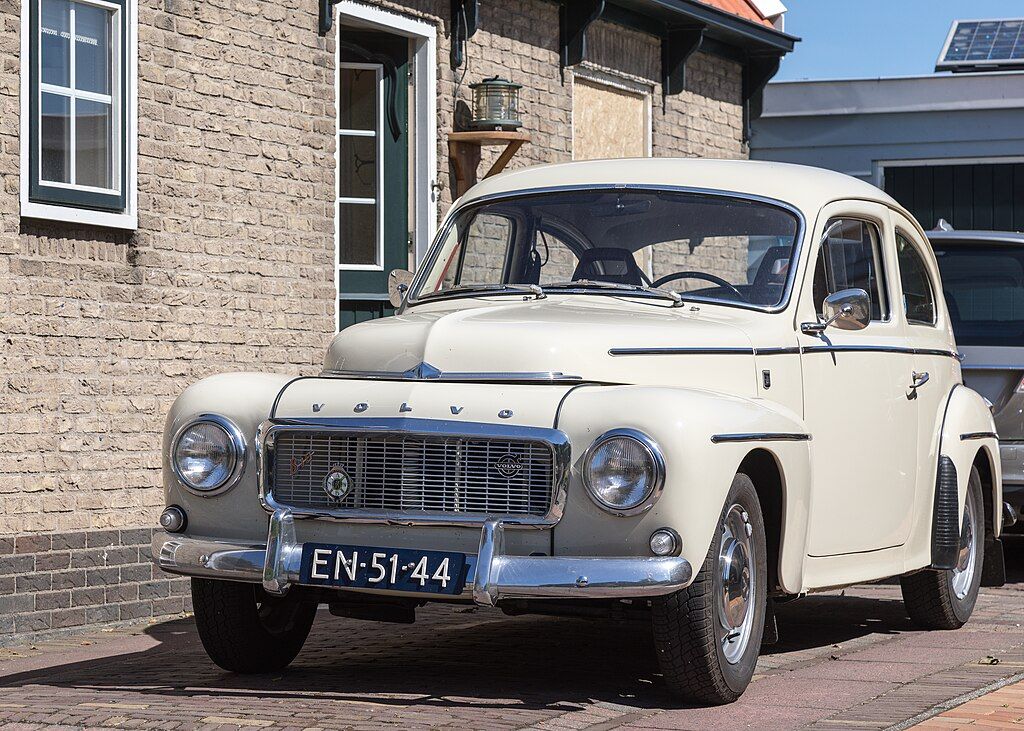
The First Car with a Seatbelt as Standard
Image: Volvo PV 544 by JoachimKohlerBremen, CC BY-SA 4.0, via Wikimedia Commons
The Volvo That Changed Car Safety Forever
You know how when you get into a car these days, one of the first things you do (almost without thinking) is click your seatbelt? It’s just part of getting in, isn’t it. But there was a time when seatbelts weren’t standard at all. In fact, there was one car - a Volvo - that really changed how we all view safety in cars. Let me tell you that story.
What cars were like before seatbelts
Back in the early days of motoring, cars didn’t always have much in the way of safety gear. Sometimes you might get a simple belt over your lap - if you were lucky. But these were optional extras, not things you expected to always have. And those early belts didn’t do enough to stop your body’s upper half from flinging forward in a crash.
Crashes were dangerous - the sudden stop, the jerking, everything inside you keeps moving if nothing holds you back. Drivers and passengers had very little in the way of protection.
The Volvo engineer who made a difference
In 1958–1959, Volvo hired an engineer named Nils Bohlin. He was thinking: “Alright, how can we make people safer in cars?” He drew on experience (he had worked on safety in aviation, among other things) and set to work on a better belt.
Within about a year, he came up with what we now call the three-point seatbelt - that is, a belt that goes over your lap and also across your chest, meeting at a buckle somewhere near your hip. That way, in a crash, it spreads the force over stronger parts of your body (pelvis, chest, shoulders) so you don’t get twisted or smashed so badly. Volvo introduced this in their cars in 1959.
Here’s a neat thing: Volvo chose not to try to make money from that belt. They made the patent “open,” meaning other car makers could use the design free of charge. They wanted safety to spread, not be locked away.
Which car got it first - and as standard?
On August 13, 1959, Volvo delivered the first car fitted with the three-point belt as standard. That car was a Volvo PV544.
But when people ask “which model was the first to have it as standard in all cars of that model,” the Volvo 122 (also called the “Amazon” in some markets) often gets credit.
Volvo’s Amazon (or 122 series) started offering front-seat three-point belts as standard equipment - even on export models - not long after that first PV544 demonstration.
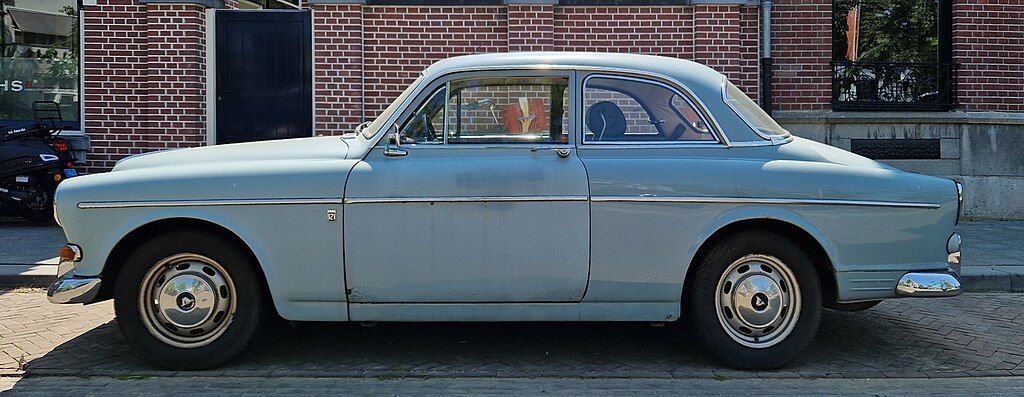
Image: Blue Volvo Amazon side view by ReneeWrites, CC BY 4.0, via Wikimedia Commons
So, in simple terms: Volvo was the first maker to commit to this improved belt design for all its cars, not just as an option.
Why this was a big deal
This wasn’t just a small tweak. Before Bohlin’s design, belts were sometimes avoided by buyers (they were uncomfortable, awkward), or only fitted in more expensive models. But once a good belt is standard, people use it more, and safety improves. Over time, most car makers adopted the idea, legislation followed, and today it’s unthinkable to sell a car without belts.
Volvo estimates that over time, Bohlin’s three-point belt has saved more than a million lives.
Even now, the design (maybe with tweaks) is still the backbone of how most cars restrain occupants.
How did that change things in places like Manchester or Stockport?
When cars around Britain and Europe began to include seatbelts as standard, it meant daily journeys, rush hour, motorway drives - everything got a layer of safety most of us take for granted now.
If you live in Stockport and drive out toward the Peak District, or head south toward Manchester city centre, you want to know that in a crash your car is doing what it can to protect you. That first step - having the belt - is absolutely fundamental.
Over time, more innovations joined the belt: pretensioners (belts that tighten in a crash), load limiters (so the belt doesn’t injure you by being too tight), airbags, crumple zones in car bodies, systems that detect collisions ahead. But without that three-point belt, many later systems would be far less effective.
What’s the lesson for us today

When you walk into one of our Dace Motor Company centres - whether in Stockport or Manchester - and see a used car, it’s good to check how well its safety kit is functioning. Seatbelts remain one of the most essential protections. Even in cars that are 10 or 15 years old, belts - if well maintained - do a huge job.
If a belt is frayed, or the mechanism feels loose, or the buckle is sticky - those are red flags. Always check for proper operation, and take the time sometimes to replace or repair them. It’s not glamorous, but it matters.
Also: when you read specs, safety ratings, or browse test results (NCAP and such), note how much weight is put on restraint systems. You’ll see belts, airbags, side-impact protection, and so on. But they all build on what Bohlin’s invention started.
How cars evolved after that
After the three-point belt became common, car makers worked to refine it. Belts got stronger materials, better geometry, better anchoring in the car’s structure. Belts started being used in back seats too.
Airbags started to join belts as partners in safety. Car bodies began to be engineered so that, in a crash, energy is absorbed in defined zones rather than being transferred into the passenger space.
Eventually, safety electronics came along - systems that detect an impending crash and tighten belts early, or flash warnings to buckle up if someone hasn’t. All of those are enhancements. But none would be effective without that base: the belt holding you in place.
A day in the life - imagining life before belts
Picture this: you’re driving from Stockport to Manchester, maybe going to catch a tram or meet someone. In a modern car, you buckle up automatically, no question. But imagine if that car had no belts, or just a loose strap across your waist. If you had to slam on the brakes, your body keeps going - head forward, chest forward, maybe colliding with dash, steering wheel, or windshield. The risk of serious injury is huge.
When you wear a proper belt, your body is held in place just enough that it follows the car’s motion - it slows down with the car, rather than being violently thrown around. That difference - often the difference between life and serious injury - is real.
Volvo’s choice to make the belt standard, and share the idea freely, helped that become the norm. Because if only one maker used it, it would take ages for the whole industry to catch up.
A note or two about how laws followed
Car safety laws tend to lag behind innovations. In many places, belts were optional at first, then later laws required them for front seats, then back seats, then required that they be three-point belts, etc.
In the U.S., for example, from about 1968 onwards, vehicles had to begin including belts. In Europe and Britain similar regulations followed. As public awareness of crash risks grew, governments stepped in to mandate safety gear.
Still, the maker has to think ahead. Back in 1959, Volvo didn’t wait for law to require the belt - they just decided it should be standard.
Why we remember this at Dace Motor Company
At Dace, we believe a car is more than its looks, kilometers, or features. Safety is one of the core things you should expect and trust. When you walk into our showrooms - in Reddish, or Buxton Road, or as you pass through Manchester - we want you to feel confident that every car you see has been checked for essentials: structure, brakes, belts, all that.
We do HPI checks, warranty, etc., because we know that when you hand over your money, you're counting on the car to be solid. But also, when you buckle up, you expect that belt to do its job. That legacy from Volvo back in 1959 is still with us every time someone clicks in.
So when you're browsing used cars with us, or we’re helping you pick one, ask: how’s the safety gear? Is everything operating well? It’s not flashy, but it’s vital.