


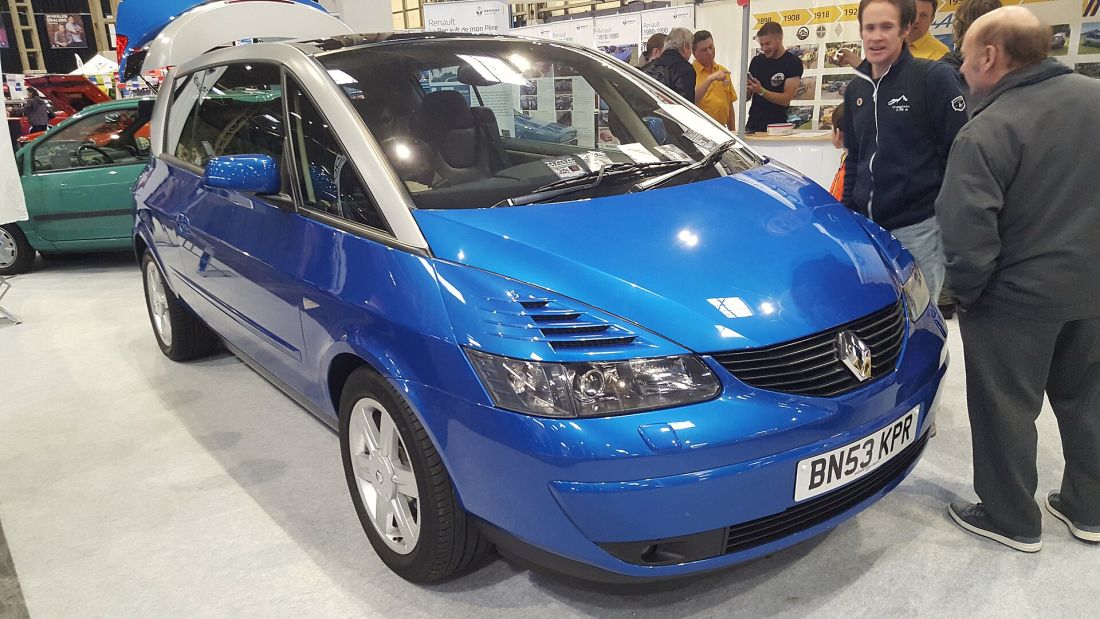
Renault Avantime: The Luxury MPV-Coupé That Was Too Strange to Survive
Photo: 2003 Renault Avantime by Kieran White from Manchester, England, CC BY 2.0, via Wikimedia Commons
There are cars you recognise at once, and then there’s the Renault Avantime. Imagine you’re moving through Stockport on a grey Saturday, past the usual mix of family hatchbacks, small runabouts and smart saloons, when something tall, silver-framed and oddly glamorous rolls into view. It has the stance of a roomy family car, the doors of a grand coupé and enough glass to make it look as though a conservatory has decided to go for a drive. You’d look twice. You might look three times. The Avantime was that kind of car from the day it appeared. Renault wanted to create a luxury car for people who liked the airy seating and relaxed feel of a people carrier, but no longer needed a full seven-seat family machine. The result was a large, four-seat, two-door Renault that felt roomy rather than cramped, stylish rather than sensible, and wonderfully hard to place.
That last part was also its problem. Buyers could easily explain a small hatchback, a family estate or a sleek two-door cruiser to themselves. The Avantime needed a longer chat. Was it practical? Quite. Was it sporty? Not really. Was it posh? It certainly tried to be. Was it strange? Oh yes, and proudly so. At Dace Motor Company, unusual used cars always have a way of starting a conversation, especially around Manchester and Stockport where drivers see plenty of everyday traffic. The Avantime would still turn an ordinary queue near the Mancunian Way, the A6 or Greg Street into a small car-spotting moment. It didn’t sell in big numbers, and it wasn’t built for long, yet that’s part of why people remember it now. This is the Renault that took a sensible idea, gave it giant doors and a glass roof, then discovered that being memorable isn’t the same as being easy to sell.
What Was the Renault Avantime and Why Did It Look So Different?
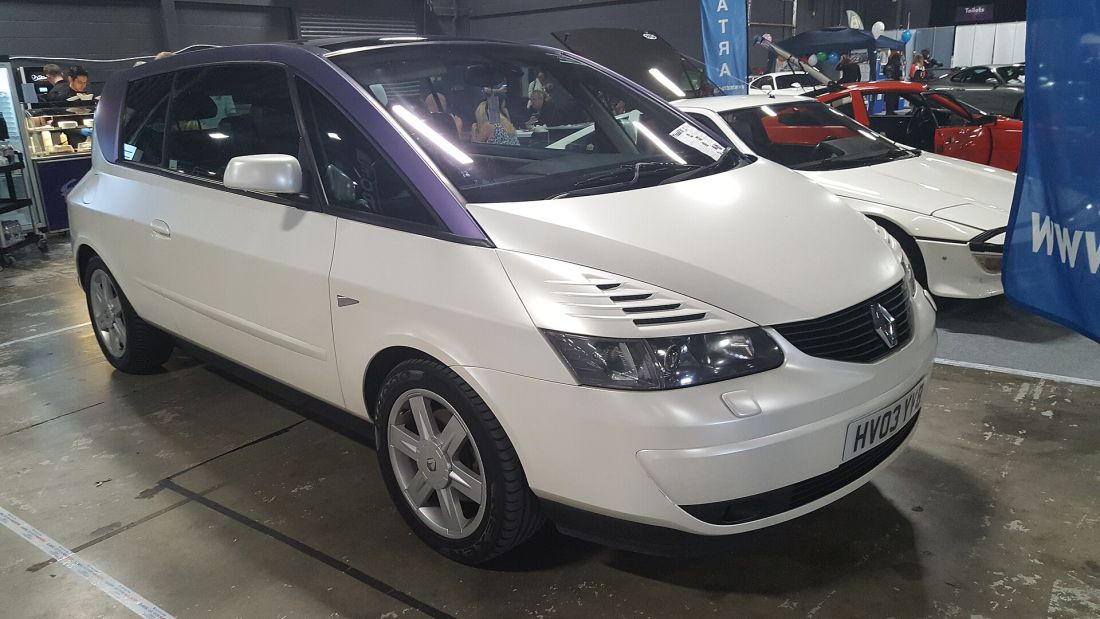
Photo: 2003 Renault Avantime by Kieran White from Manchester, England, CC BY 2.0, via Wikimedia Commons.
The Avantime was built from 2001 to 2003 by Matra for Renault, and the idea behind it was unusually specific. Matra had deep experience with the Renault Espace, the roomy family people carrier that helped change the way European families thought about carrying children, shopping and luggage. Then came a curious question: what might those drivers buy after the children had grown up and there was no longer a need for a big multi-seat family car? Renault and Matra imagined that some would still like a high seating position, open space and an easygoing cabin, yet want something with a little drama. So they created a car with four adult seats, two enormous side doors and a roofline meant to bring a sense of occasion to an otherwise calm, roomy shape.
The name suited the ambition. “Avant” is French for “ahead”, while “time” stays English, joining together to suggest a car looking forward. Renault called the concept a “Coupéspace”, which is a neat way of saying it joined the mood of a coupé with the breathing room of a people carrier. The styling work is linked with Patrick Le Quément at Renault, while Philippe Guédon at Matra is credited with the starting idea. The production car stayed startlingly close to its show-car appearance. Even now, the tall sides, silver-coloured upper frame, upright rear end and narrow-looking glass areas around the nose make it hard to confuse with anything else. This wasn’t a car made by gently reshaping an ordinary model and adding a fancy trim level. It was a fresh proposal, one that asked customers to accept that luxury didn’t need to mean a low saloon or a familiar German badge. That was a brave ask in the early 2000s. And, as history showed, perhaps a bit too brave.
How Renault and Matra Created a Luxury People-Carrier Coupé
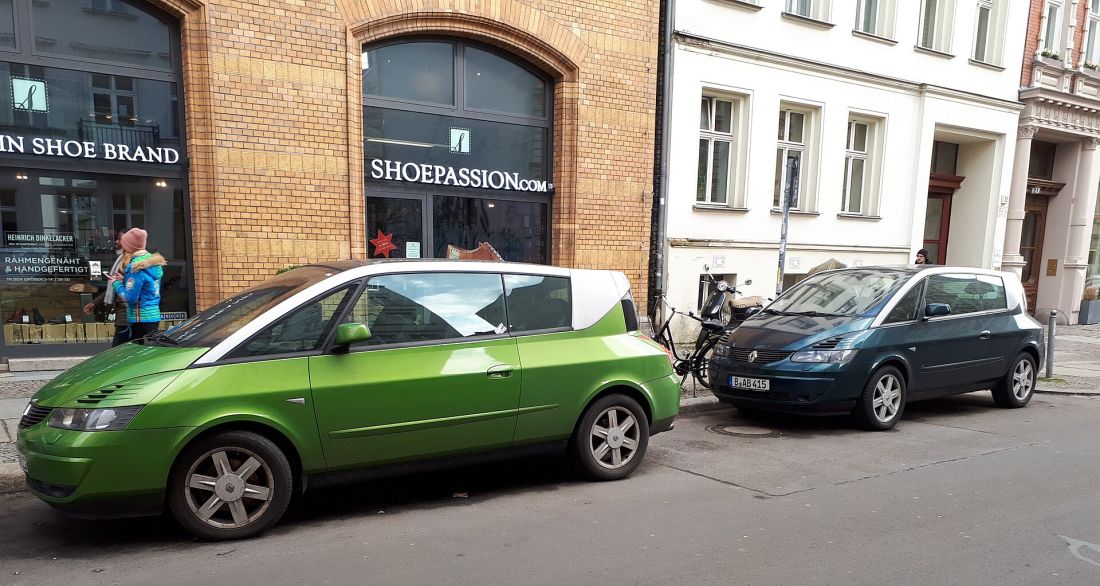
Photo: Renault Avantime by Fridolin freudenfett, CC BY-SA 4.0, via Wikimedia Commons.
To get why the Avantime matters, it helps to remember how bold the Espace had seemed years earlier. A tall family car with a huge cabin was once an unfamiliar idea too, before school gates and holiday routes filled with vehicles built around space and flexibility. Matra had helped make that Renault success happen, building the first three generations of Espace. The Avantime was meant to take some of that confidence into a smaller, more exclusive corner of the market. Instead of chasing families who needed several rear doors and rows of seating, it went after adults who wanted comfort, light and a sense of style. Its structure was linked to the outgoing Espace, with a galvanised steel base, an alloy frame above the waistline and composite outer panels. That combination helped give the car its striking two-tone look, where the silver upper sections frame the cabin almost like architecture around a glass room.
Production took place at Matra’s factory in Romorantin, France, rather than in one of Renault’s own mainstream plants. That tells you something about the Avantime. It was never meant to be the ordinary choice lined up in every company car park. It was a specialist idea, built by a business used to unusual engineering and limited-production vehicles. But good ideas still need the timing to land properly. Development took longer than expected, partly because the roof, wiring and doors were difficult to get right. The Avantime reached buyers as Renault was also launching the Vel Satis, another large and unconventional upmarket model. So rather than having one clear, fresh flagship to explain, Renault had two unusual cars asking for attention at almost the same moment. For a customer with a healthy budget, a familiar luxury saloon still felt like the easier answer. The Avantime was clever, but a clever car can lose its chance if people have to spend too long working out where it fits.
Inside the Renault Avantime: Giant Doors, Glass Roof and Lounge-Like Comfort
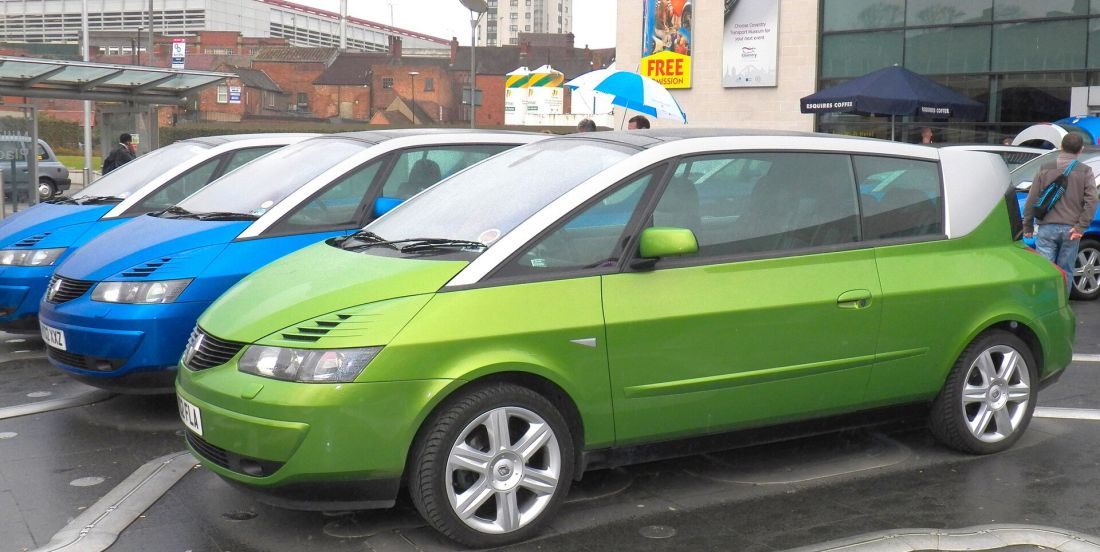
Photo: Renault Avantimes by Conrad Longmore, CC BY 2.0, via Wikimedia Commons.
The outside of the Avantime got people talking, but the cabin explained why anyone thought the car was a good idea. It was bright. Really bright. There were no central posts splitting the side glass in the usual way, which meant the side view could feel broad and open once the windows were lowered. Overhead sat an enormous glass roof, the kind of feature that turns a dull day into something lighter and makes a clear day feel almost like you’re sitting on a terrace rather than driving along the M60. Then there was the “Grand Air” control, which opened the roof and dropped the side windows together. Press it on a warm spring afternoon and the Avantime changed character, letting air and daylight sweep through a cabin built for four relaxed passengers.
Those rear passengers weren’t treated as an afterthought either. Their seats were raised to help them see ahead and enjoy the view, a theatre-style idea that gave the back of the car a proper sense of comfort rather than the squeezed feeling many two-door cars give anyone unlucky enough to climb in behind the front seats. And yes, climbing in meant using those doors. They were huge, because there were no rear doors, yet they didn’t simply swing wide and demand half a car park bay. Each used an unusual double-action hinge, moving in a way that made access easier in tighter spaces. That was a thoughtful answer to a very obvious problem. You know how it is in a busy car park around the Trafford Centre or Stockport retail parks: even a normal door can feel awkward once someone has parked close. The Avantime’s doors still needed care, but the engineering made the idea far less silly than it sounded. Inside, the car’s point became clear. It wasn’t trying to be small, sharp or sporty. It wanted to feel like a quiet, glass-roofed lounge that happened to move.
What Was the Renault Avantime Like to Drive?
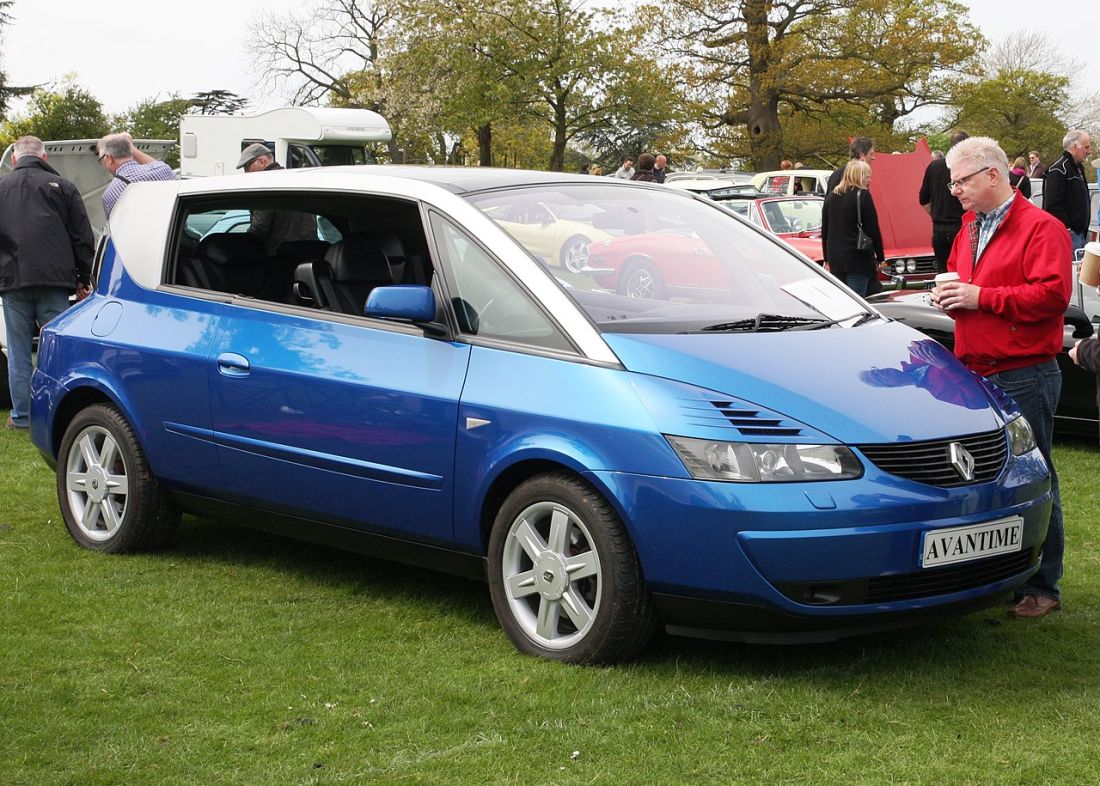
Photo: Renault Avantime by Charles01, CC BY-SA 4.0, via Wikimedia Commons.
A car shaped like the Avantime makes you expect a bit of drama behind the wheel. Maybe it’ll feel futuristic, maybe fast, maybe completely bonkers. The truth is much calmer, and that’s part of its charm. British buyers were offered petrol versions, including a two-litre turbo model and a three-litre six-cylinder car, with manual and automatic gearboxes depending on version. The large-engined automatic is the one that best matches the car’s personality: smooth, unhurried and happiest carrying four people in comfort rather than trying to dart down a twisty road. The two-litre turbo is lighter and can feel a little more eager, but neither version turns the Avantime into a small sports car. It sits high, has a generous body and carries the relaxed manners of the family-car roots beneath it. On a steady motorway run, that makes sense. The seats, airy view and hushed feel matter much more than sharp cornering.
If you were heading from Stockport out past Glossop for a day in the hills, you’d probably enjoy the broad view and easy pace far more than any attempt to rush every bend. Reviews from the period and later road tests describe a car that is comfortable and distinctive, with the three-litre model especially suited to easy cruising, while its height and weight make fast cornering far less convincing. That isn’t really a criticism once you stop judging it as a sports coupé. This was never meant to be a low, tight two-seater that made every traffic island feel like a race circuit. It was a big, glassy, grown-up car for people who wanted calm travel with a surprising view of the sky. The strange part is that Renault put all that calmness in a body which looked so bold. You expected fireworks. What you got was a very comfortable chair with wheels, fresh air and a passing lane full of curious faces.
Why Did the Renault Avantime Fail to Find Enough Buyers?
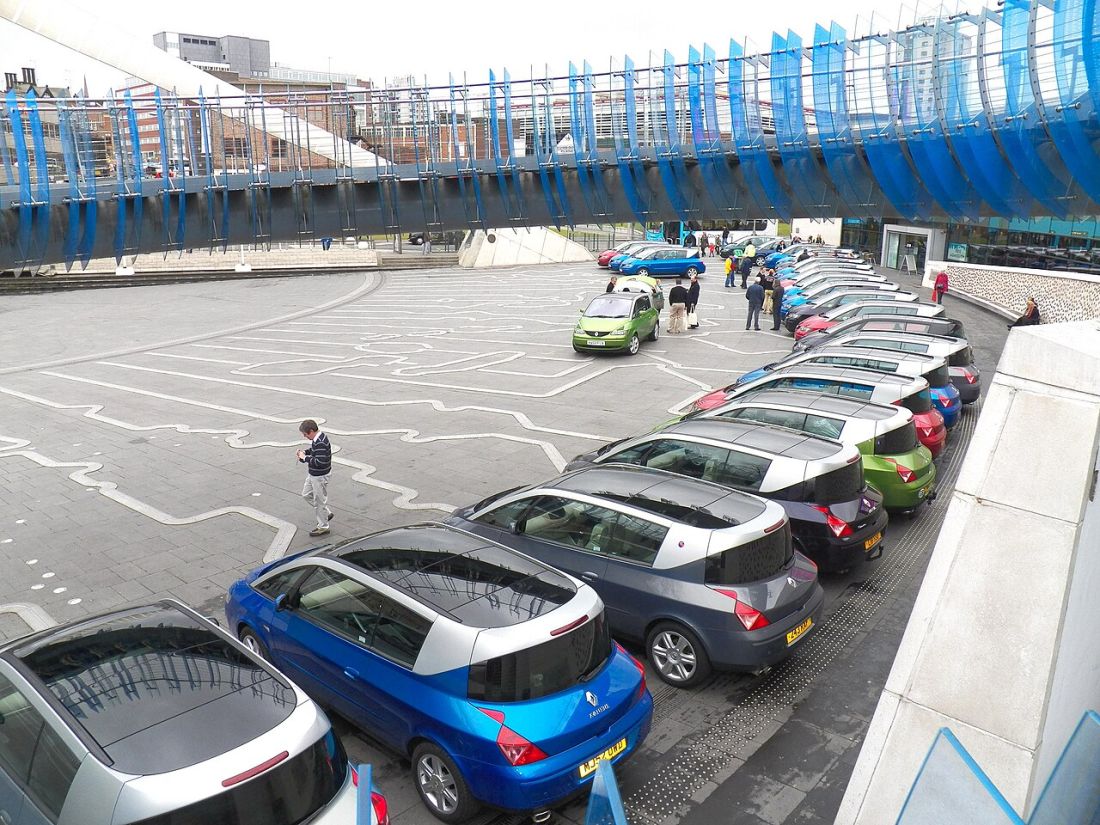
Photo: Renault Avantimes at Coventry Transport Museum by Conrad Longmore, CC BY 2.0, via Wikimedia Commons.
Let’s face it, the Avantime wasn’t short of ideas. What it lacked was a large crowd ready to pay for them. New-car buyers are sometimes adventurous, but a big purchase usually makes people cautious. The Avantime asked them to spend luxury-car money on a Renault that didn’t resemble the luxury cars they already knew. At the same time, its two-door layout made it less handy than a family people carrier for anyone still dealing with children, child seats, grandparents or regular rear-seat passengers. Then, for drivers who no longer needed family practicality, a lower and more familiar coupé could seem simpler and smarter. The car sat between familiar choices, and that gap was smaller than Renault hoped. Its price made the problem sharper. In the United Kingdom, the most expensive three-litre versions reached around £30,000 when new, which placed them in serious company.
Another issue was the arrival of Renault’s Vel Satis, a separate large upmarket car with its own unconventional looks. Rather than letting the Avantime stand alone as the bold statement car in the range, Renault had two unusual big models to market and explain. Matra faced a difficult situation as well. The new Espace was no longer being made there, the Avantime wasn’t selling in the numbers needed, and production ended at Romorantin in February 2003. In all, just 8,557 Avantimes were built. The British story was even smaller: Classic & Sports Car records 452 right-hand-drive cars for the United Kingdom. Those figures explain why seeing one now feels like spotting a rare bird on a suburban roundabout. The car didn’t disappear because it was dull or without merit. It disappeared because its audience was narrow, its build was costly, its brand position was awkward and its moment passed before enough buyers warmed to the idea. A brilliant conversation piece, sadly, isn’t always a winning showroom plan.
Why the Renault Avantime Is Now a Rare Modern Classic
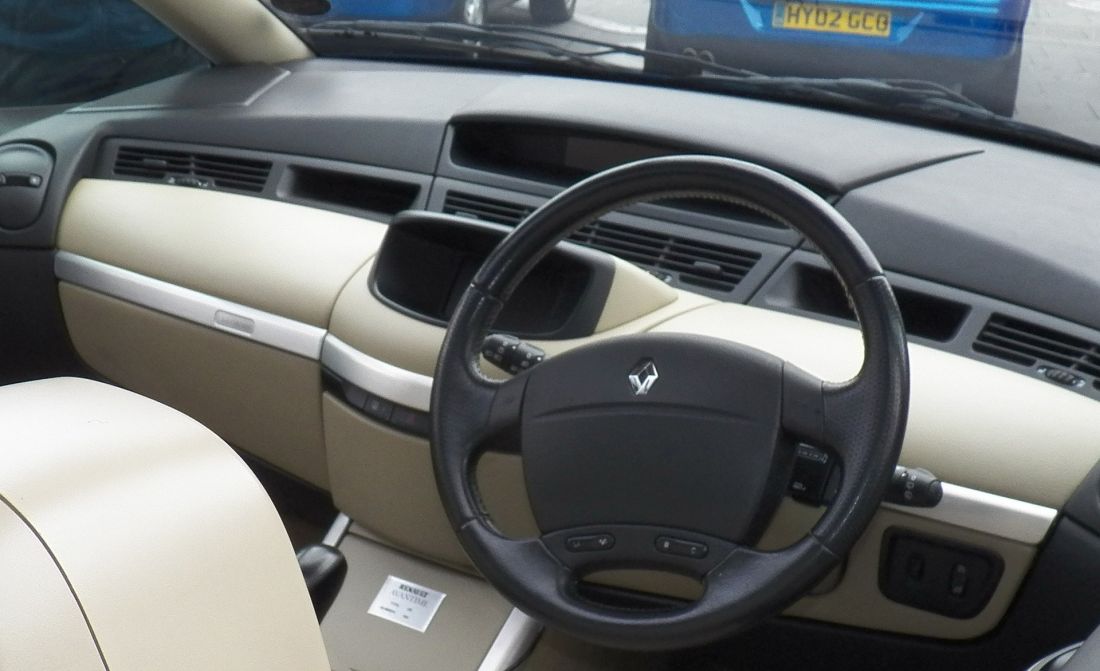
Photo: Renault Avantime (interior) by Conrad Longmore, CC BY 2.0, via Wikimedia Commons.
Failure can look very different after twenty years. Back when the Avantime was new, its odd mix of luxury, height and two-door styling left people unsure. Today, the same oddness makes it appealing. Modern roads are filled with tall cars that borrow styling touches from coupés, so the basic thought behind the Avantime no longer seems quite so wild. Yet very few newer cars copy its full recipe: a true two-door body, pillar-free side openings, enormous windows, a huge sliding glass roof and a cabin aimed at four adults rather than a family crowd. The Avantime feels less like an early attempt at a current trend and more like a car maker letting its designers be brave for a moment. Rarity gives it added pull. With only 8,557 made, and just 452 right-hand-drive examples produced for British buyers, any surviving car has a built-in story. It isn’t the sort of used car that disappears into a row outside a supermarket.
It draws questions. People ask what it is, whether it’s really a Renault, and why they don’t see them around. Yet buying one just because it is rare would miss the point. Its appeal comes from the experience: the bright cabin, the laid-back seats, the sweeping view, the dramatic doors and that strange sense that an ordinary trip has become a tiny event. A drive from Manchester to Alderley Edge, a Sunday run through Marple or even a slow crawl through roadworks can feel different inside something so unusual. Some cars become classics because they were fast or famous. The Avantime has taken another route. It has become interesting because it tried something difficult, looked unlike its neighbours and vanished before the idea could become normal. That doesn’t make it right for every buyer. It does make it one of the most memorable Renaults of its era, and a car that feels far easier to love now than it did when a salesperson first had to explain it.
Buying a Used Renault Avantime: What Should You Check?
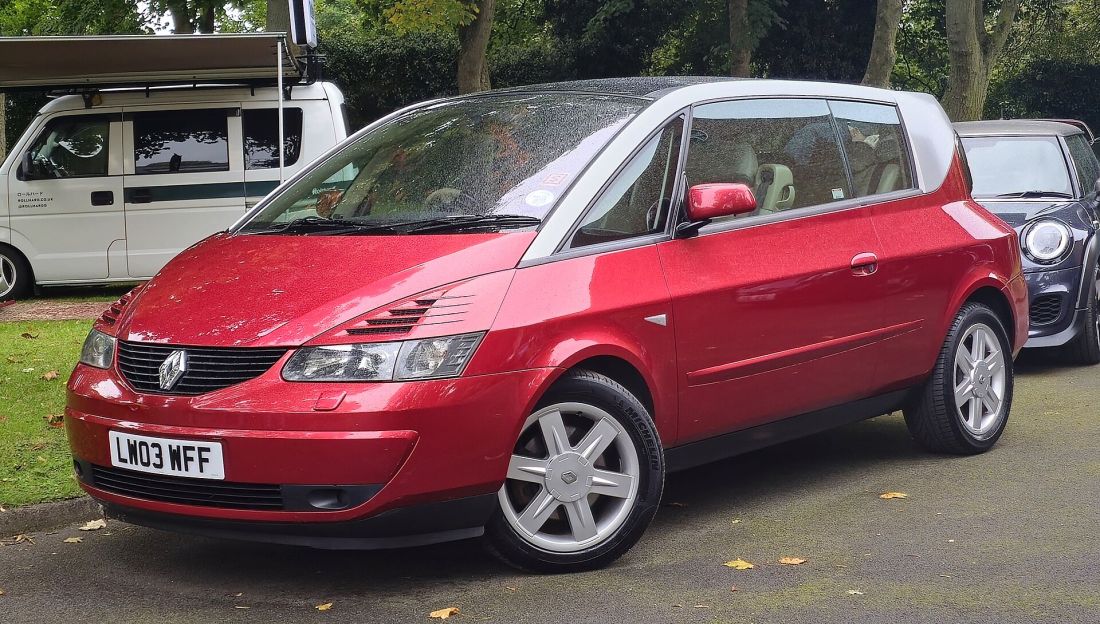
Photo: 2003 Renault Avantime by Calreyn88, CC BY-SA 4.0, via Wikimedia Commons.
A used Avantime can be very tempting, especially once you’ve seen the roof open, settled into the cabin and imagined the reactions in traffic. But a rare car needs a cooler head than an ordinary runabout. Begin with the special features that make this Renault different. Open and close both giant doors slowly, checking that the hinges feel smooth, the doors line up properly and the windows behave as they should. Test the roof several times, along with the button that opens the glass and windows together. Look carefully for dampness, water marks or a musty smell, because a bright glass cabin isn’t much fun if rain finds its way inside. Test every electrical item you can find, from displays and climate controls to mirrors, locks and seat functions. With older cars, small faults can pile up; with a rare car, model-specific parts may take longer to track down.
The rear light units and certain trim pieces have become difficult to source, according to specialist classic-car coverage, while items such as a heated windscreen can be costly. Mechanical checks matter too. Ask for maintenance invoices, not just a stamped book or a friendly promise. On a three-litre car, evidence of timing-belt replacement is especially important. Check the gearbox on a long drive, making sure it changes cleanly when cold and warm, and listen for suspension noises on rough roads. Have a vehicle history check completed and, before buying, arrange an inspection with someone comfortable working on older Renaults. That may sound less exciting than pressing the roof switch and enjoying the view, but it’s how a characterful car stays enjoyable rather than becoming a driveway ornament. At Dace Motor Company, we think unusual cars deserve honest attention: buy for the charm, certainly, but check the condition, history and likely costs before falling completely under the spell.
Why the Renault Avantime Still Stands Out on Manchester and Stockport Roads
Cars tell you something about the years that created them. The early 2000s brought some genuinely daring shapes, and the Avantime may be one of the boldest of the lot. It came from a time when Renault was happy to try a car that didn’t fit neatly into the normal boxes, and you can feel that confidence whenever one passes. Around Manchester and Stockport, where the roads are packed with cars chosen for work, family life, weather and everyday value, an Avantime feels almost cheeky. It’s tall without pretending to be rugged. It’s luxurious without copying the usual luxury formula. It’s practical in some ways, wonderfully impractical in others, and somehow that mix gives it warmth. You know how it is: some cars make total sense on paper but leave you feeling very little. The Avantime does the reverse. You can see its weaknesses quickly, yet you still want to walk round it, open that huge door and look up through the roof. Perhaps that is why it has found the respect it missed while new. It never needed to beat ordinary family cars at ordinary family tasks, and it never needed to replace the familiar luxury coupé. It needed time for people to appreciate that it was its own odd, comfortable, glass-filled thing. It was too strange to survive as a new-car success, but just strange enough to be remembered with real affection. For anyone who spots one near Deansgate, beside the Stockport Pyramid, moving through Eccles or parked on a quiet side street in Reddish, take a moment to enjoy it. You’re looking at a rare car from a company willing to try something unexpected, a car built in small numbers because the market wasn’t quite ready, and a car that now seems all the better for refusing to be ordinary. The Renault Avantime lost the sales battle. As a talking point, it’s doing just fine.